
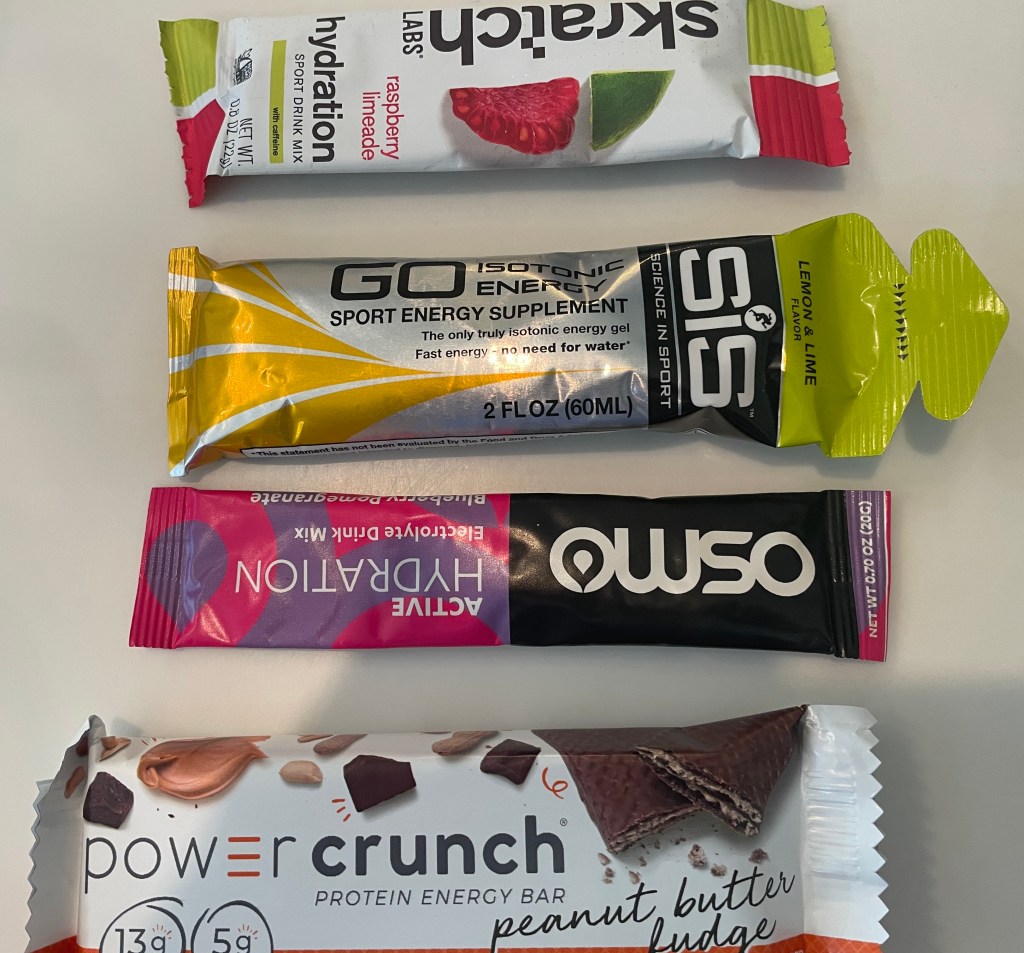
Today, there’s a myriad of nutritional supplement options available to athletes, especially cyclists. That makes finding the right ones that work the best for us individually complicated. For example, some supplements will have too much sugar or not enough. And of course, the single biggest problem with supplements such as sport drinks, gels, and bars is their flavor.
If the flavor of a supplement isn’t good or the energy it is supposed to deliver is inadequate, we won’t use it (or use it enough). But these supplements are ride essentials because on a hot day and long ride, your energy level will diminish as the hours tick away. You’ll need something outside a mushy banana and water to see you through to the end.
What are Sports Supplements?
According to the Cleveland Clinic website, sports supplements are designed to “fill gaps in the diet of people who play sports or workout on a regular basis.” In other words, sports supplements are not meant to be used for healthy meal replacement.
To me, the primary role of supplements is to offer sustained energy before and during a ride and also to quench whatever craving I have for food during a long ride.
That said, it’s always good to be aware of what ingredients are in products before you consume them. The last thing you want is to consume a supplement and have it give you gastrointestinal distress.
In most cases, as the Cleveland Clinic points out, these supplements are subjected to extensive research and testing to prove their benefit. Still, and because they are supplements, the FDA doesn’t monitor nor check the safety or effectiveness. So, my suggestion is to buy some samples and see what works for you.
A good place I found online that I’ve used recently is The Feed. They carry every imaginable sport’s supplement on the market. They also offer a 15% discount on your first order.
Sports Drinks
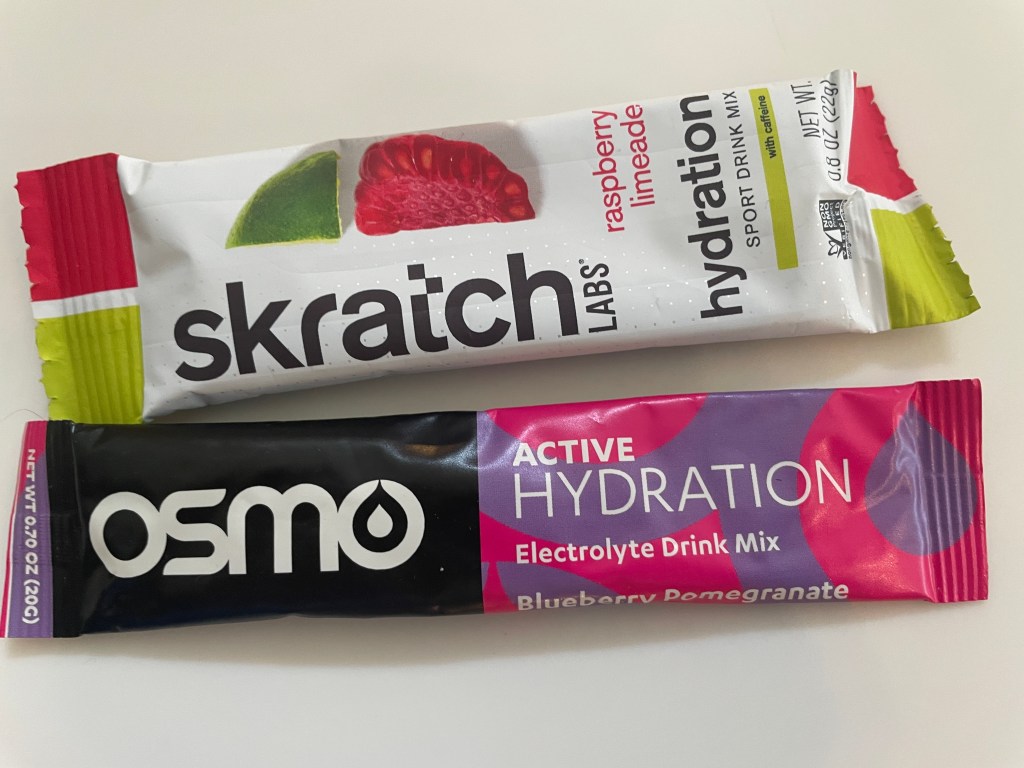
Sports drinks can come many ways. They can be bottled drinks, but most of the time, they will come as packaged powders to be diluted and mixed with water. Usually, these drinks are flavored, which means you have to watch for high amounts of sugar. Many sports drink makers, though, have gone to organic sugars and ingredients.
It’s important to note, though, that if a drink doesn’t explicitly say “electrolyte replacement, ” which is supposed to replace sodium and potassium that are both lost while sweating, you may want to choose another drink.
It’s also important to note that sport drinks are not needed by everyone. Unless you are out on a 3 to 4 hour long ride with lots of hard efforts every time you ride, chances are you won’t need the sodium, sugar, and potassium a sport’s drink contains. Water and a banana will probably get you by. Plus, there was a study done not so long ago that stated sport drinks can break down tooth enamel.
Gels
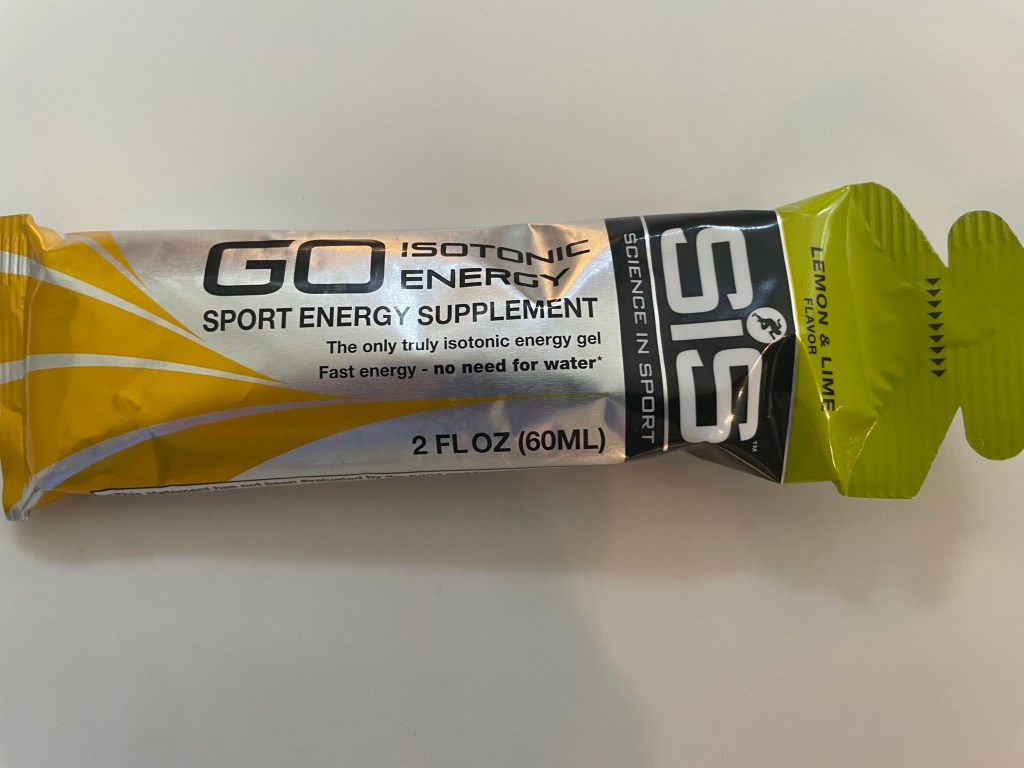
As far as supplements go, I prefer gels. They come in liquid form and deliver a boost of energy and nutrition quickly, especially carbohydrates. I also like them because they are easy to digest and go well with water or a sport’s drink. But like other supplements, they have their positives and negatives.
For one thing, gels can be sticky and messy. If you use one, it’s best to consume it in one go and not save it for later in a ride. Some other negatives are what to do with the empty package. If I’m not close to a trash receptacle, I’ll just stuff it in my jersey pocket to throw away later, just make sure to not forget it’s there, especially when you go to wash your jersey. That seemingly empty package will make a mess of your pocket and probably stain your high-end jersey.
Personally, I prefer SIS (short for Science in Sport) gels, as pictured above because they are highly water based while delivering the electrolytes and food replacement needed during a long ride. There are many gels out there, so I would recommend getting some samples or order one to two packages to try.
It’s important to find a gel you like because they are expensive from $3.00 to $4.00 per gel. I usually buy a box for the season. While gels probably won’t upset your stomach like a bar or drink might, flavor, energy delivery, etc. won’t be the same for everyone.
Bars for Pre-Ride and During
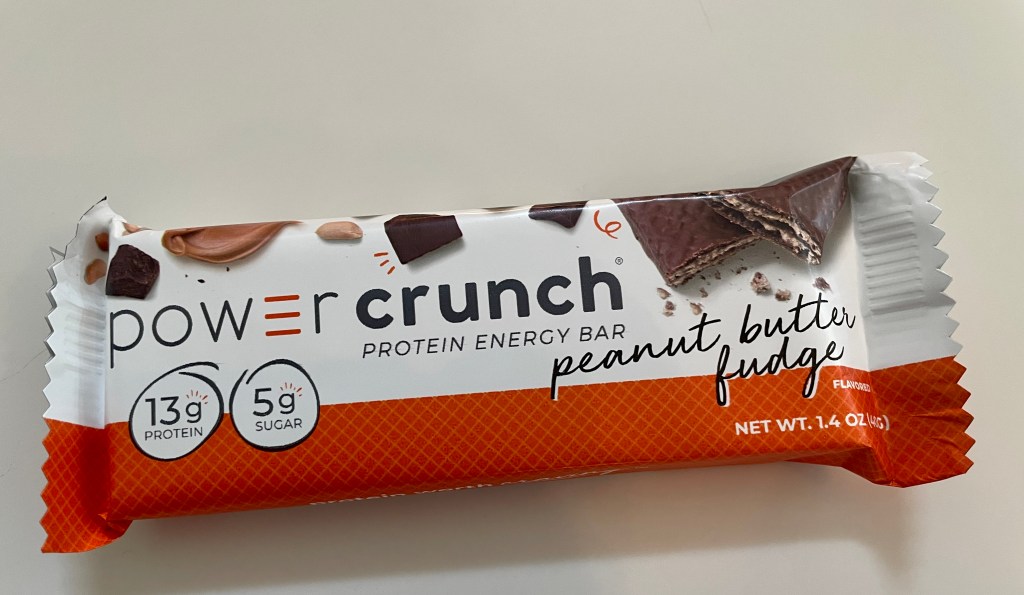
Bars are like gels in the sense that they can serve as a supplement for quick protein, carbohydrate, sugar, etc. Not all bars are created equal, though, and the wrong bar at the wrong time can have detrimental effects.
I prefer the ProBar brand for taste and meal replacement, especially before an early morning ride, and energy. They can sometimes be hard to find, so I’ll use something like the Power Crunch bar pictured above.
Bars are great because you can consume half a bar and save the other half for later in the ride, then wash it down with water or a sport’s drink. Again, there are lots of options out there, so take some time to find the one that works for you.
A good test is to eat a bar as a snack to determine if you like its taste, etc., and to see if it gives you any negative side effects. At $3.00 to $4.00 per bar, it’s wise and cost affordable to do it this way. I only use bars before a ride, usually, unless I know I’m going to be out all day.
Last Thoughts
Sport supplements such as drinks, gels, and bars are great and a ride essential. I do long rides, so I know I’ll be needing or wanting something as the ride goes on. Just make sure to test, test, test before introducing a supplement into your riding or training regime.
Remember also that a supplement should deliver more than just a good tasting product: electrolytes, carbohydrate, etc. should be thought about as well because those are the elements that will give you sustainable energy.


 Bicycle Day Trips - Bicycle Travel, Gear Reviews, Photography, Cycling News, and Commentary