Imagine you are riding down the road and you reach for your bottle from its cage for a drink, then put it back once you’re done. But sometimes you miss the cage altogether and you hear your bottle hit the pavement.
That potential always exists. It’s not only annoying, as you’ll have to ride back to retrieve the bottle, slow down, and stop to pick it up, but it can also be dangerous if you happen to be riding in a group or down a busy road.
But Ekoi, the French apparel and equipment manufacturer, has come up with a solution. They’ve invented a bottle cage and magnetic bidon (bottle), so you never have to worry about securely placing your bottle back in its cage after having a drink.
What Is Special About Ekoi’s Bottle Cage and Magnetic Bidon?
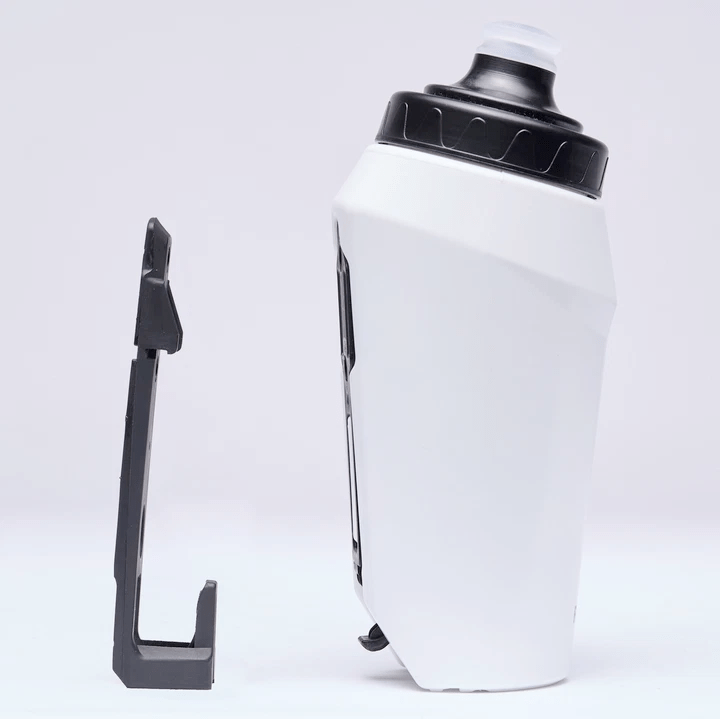
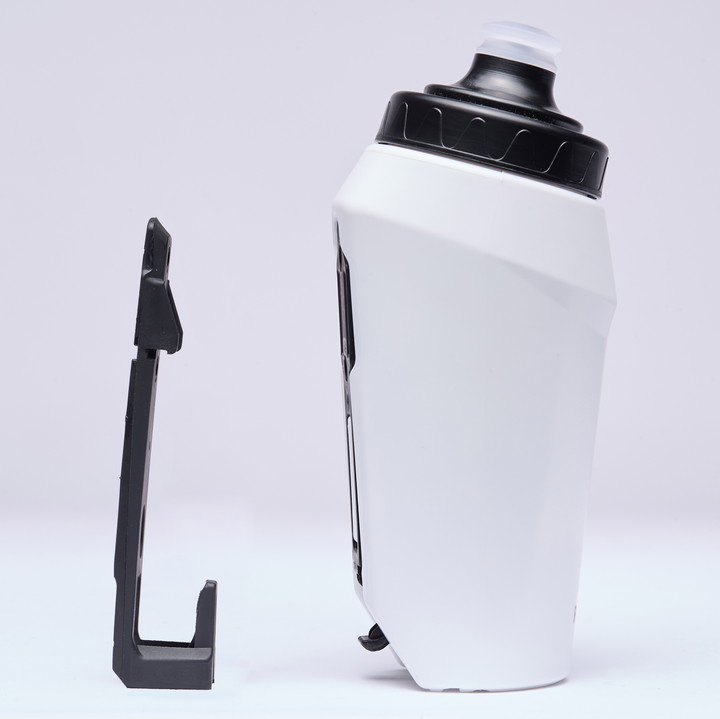
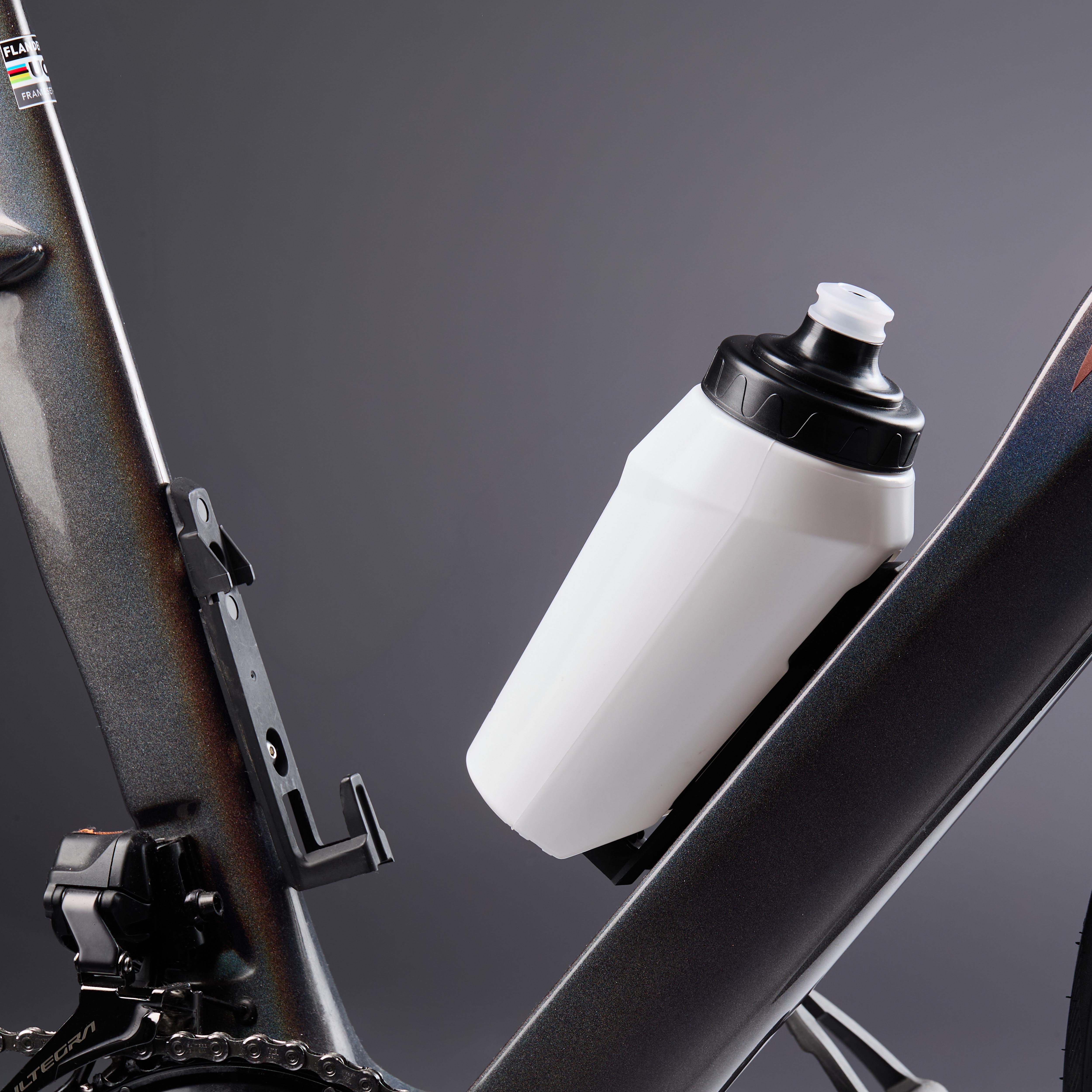
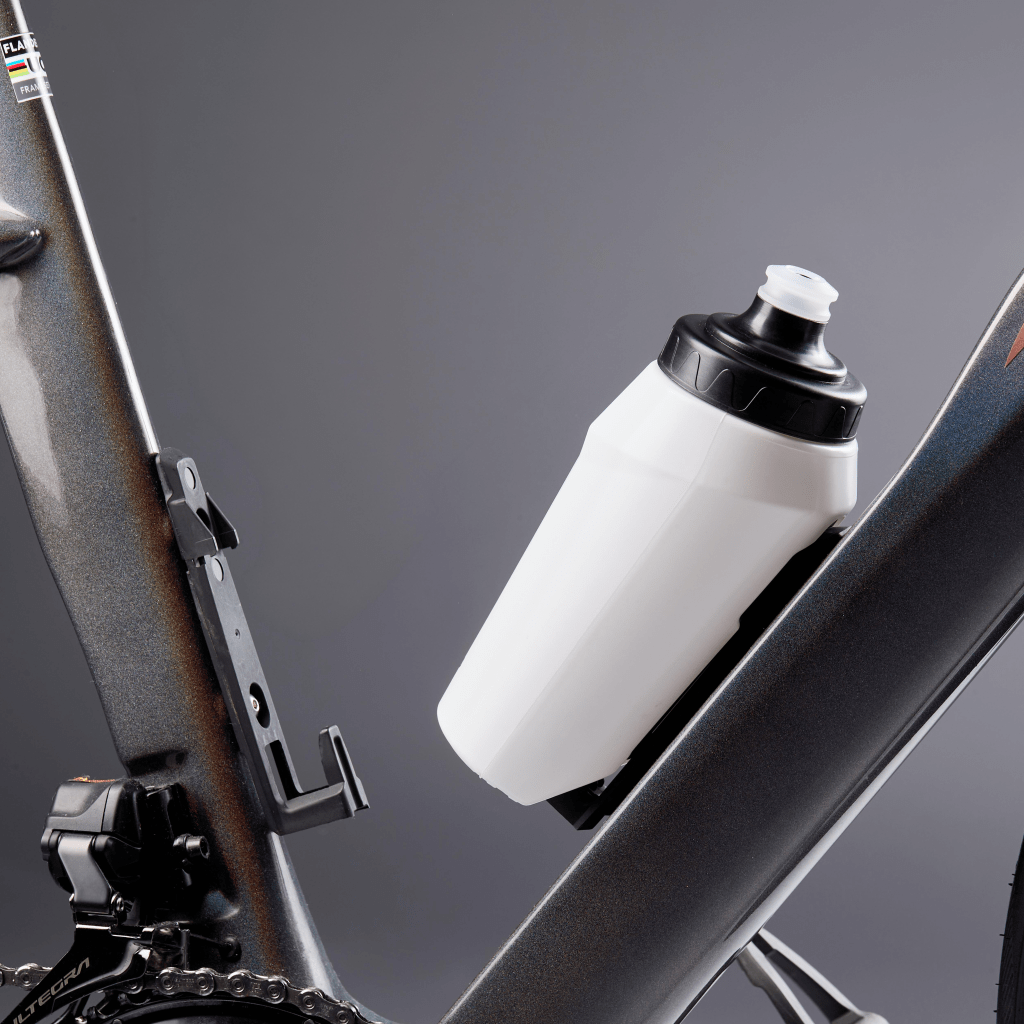
Ekoi’s new cage and magnetic bottle look like any other water bottle cage assembly. The cage installs (screws in) to the threads on your bike.
The difference here is a magnet is integrated in with the design of the bottle and runs along the back of it, the only part of the bottle, it appears, where a magnet is mounted other than the cage mount, which is also probably magnetized.
The bottle comes in white or black and holds 540 milliliters of whatever is your preferred drink (18 ounces). It is “BPA-free polypropylene with a food-grade silicone nozzle…” and is dishwasher safe. The price for this system is high. Right now, for one bottle and the mount, it is $45.00, normally $65.00.
The bottle is, however, a little different. The top of the bottle is slanted, I’m guessing, to make it easier from which to drink. It also has an adjustable nozzle so you can take in a measured drink depending on your level of thirst.
Last Thoughts
This system is a cool concept. The problem is, if you have a current bottle you love, you won’t be able to use it with this system unless you can find some way to add a magnet. Plus, for most of us, the price is prohibitive. $45 for a water bottle and mounting system seems exorbitant, but it seems everything in cycling has become very expensive.
On the other hand, if you ride on rough roads where your bottle often pops out of its cage, or you struggle with getting your bottle back into the cage after taking a drink, this system might be for you. Of course, you can always pull over and take a swig from your bottle if that’s the case. But I think the water bottle system in cycling is due for an upgrade, so we’ll have to see if the industry adopts it.


 Bicycle Day Trips - Bicycle Travel, Gear Reviews, Photography, Cycling News, and Commentary