
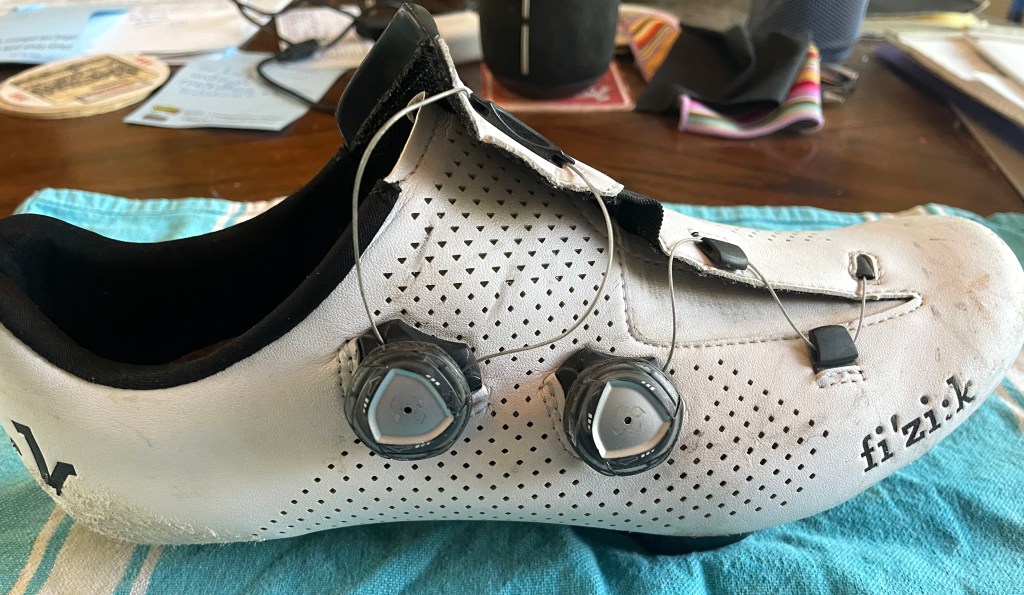
Next to your hands and your butt, your feet are one of the most important contact points in cycling. While some cyclists prefer not to put any emphasis at all on their footwear and use tennis shoes (or some other form of casual shoe) to ride in, that is really an inefficient point of view. To get the most power delivery with every pedal stroke, a good pair of cycling shoes can’t be beat.
But I hear you, cycling shoes can be expensive, sometimes don’t breathe well, they aren’t that comfortable, and you can’t really walk in them. Plus, if you decide to invest in a pair of cycling shoes, that means you will also have to buy a set of pedals. These are all valid points. Cycling shoes, though, will enhance your riding experience in many ways and that is why they are a ride essential.
Brief History of Cycling Shoes
Cycling shoes first appeared in the 1880s. From that point until the 1930s when cleats were developed, riders used a toe cage (or “clips” as they are also called) attached to the flat platform of the pedal. That gave cyclists, especially those in race situations, an advantage. The toe cage would center the ball of the foot over the axle of the pedal and keep the cyclist’s feet from sliding off the pedals.
At the beginning of the sport, cycling shoes were made of black leather and had shoe laces. The shoes had slots for cleats in the sole and were punched with holes in the leather upper. This made them lighter and breathable for ventilation purposes.
The Modern Road Cycling Shoe
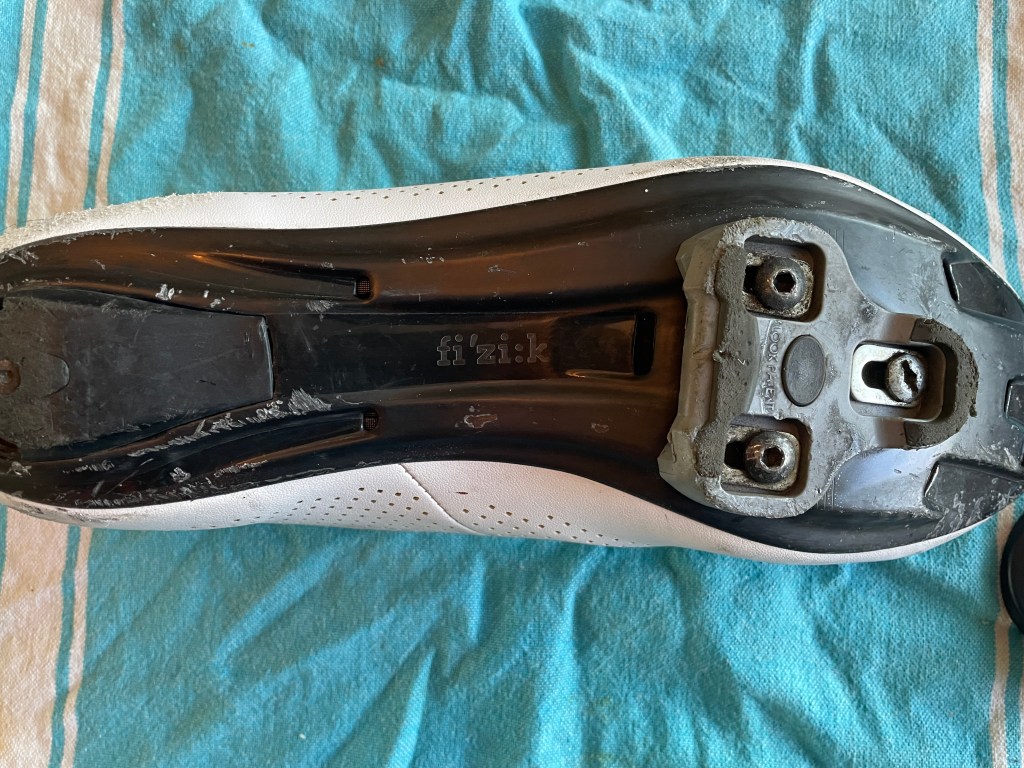
Today, cycling shoes are made from leather and synthetic fabrics and are created for all the various forms of cycling activity, not just road cycling. Cycling shoes are designed to have cleats mounted to them (usually screwed in) and to work with clipless pedal systems.
The soles of some cycling shoes are made of injected-molded plastic but are usually made from carbon fiber. Ideally, a road cyclist wants a shoe that is both stiff and lightweight. The most lightweight and high-end road shoe may come in at 400 grams whereas a lower-end shoe might weigh in at 800 grams.
In addition to laces, which have made an odd resurgence over the last couple of years, most cycling shoes have either a velcro closure, a BOA system, or a combination of both. All three choices give a cyclist the ability to dial in their comfort level. BOA (short for “boot opening adjustment”) allows a rider to perfectly set an adjustment that won’t loosen during the act of riding. It ultimately helps with power transfer to the pedals.
Mounting Cleats to Cycling Shoes
Cleat placement and positioning on your road shoes is not a minor thing. It can mean the difference between pedaling efficiently and possible damage to your knees. Ideally, the cleat should be mounted so that the ball of your foot is over the axle of your pedal when you are clipped into your pedals, which is the perfect position.
Float is another important aspect to take note of. Float is the amount of movement your foot (specifically your heel) makes from left to right as you go through the pedal rotation. This movement is determined by the cleat and pedal system you’ve chosen. Some cyclists like zero float in their cleats.
Most cyclists, however, don’t keep their legs and feet perfectly straight while pedaling, especially on a climb or during a sprint situation. That could result in damage to your knees very quickly. I’d recommend that you use a system that allows for 6 degrees of float or more, which will mirror the natural movement of your legs and feet.
With cleats positioned correctly on the shoes, a cyclist steps in and pushes down to engage with the pedal while riding. To free his foot, he turns the heel outward. During high-intensity riding (as in a race scenario), sometimes the shoe can break free of the pedal (this is rare but it can happen). That’s why many pedal manufacturers have added a tension adjustment on their pedals.
Cycling Shoes, Arch Support, and Breathability
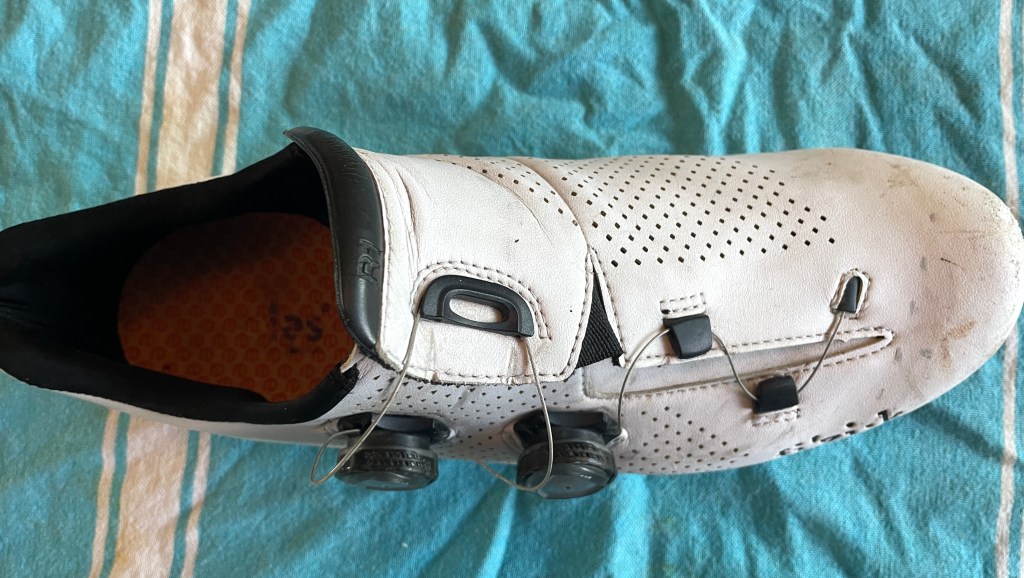
To keep weight down and allow the shoe to ventilate well, cycling shoe manufacturers brush over some fine points. Firstly, cycling shoes have no padding and not much of a footbed at all. A thin footbed allows a cyclist to tighten the shoe as much as possible, which I suppose is a good thing if your feet are narrow.
Cycling shoemakers also don’t usually account for cyclists who have low or high arches. I’ve encountered this issue with just about every pair of riding shoes I’ve owned. If you wear your cycling shoes without arch support and that’s something you adjust for in your street shoes, you’ll profoundly notice it while on a ride. Fortunately, you can usually find arch support inserts, which will help with your overall power transfer. They may also lend stability to your knees.
Lastly, breathability can also be an issue. If a cycling shoe is not ventilated well or made of a material that moves sweat away from your feet, discomfort will set in quickly. Not to mention that if your feet become very sweaty and damp while riding, you open yourself up to various fungi. Wear socks that wick away moisture and you should be okay.
Last Thoughts
A decent pair of cycling shoes will definitely enhance your cycling in many ways. While it takes some time to adjust to using a clipless pedal system, overall it is worth it if you consider yourself a serious cyclist. So, make a trip to your local bike shop or sporting goods store and try on a pair.
Just remember that cycling shoes will often fit tighter than your casual or work shoes, especially in the toe box. The reason for that is to minimize possible numbness by keeping your foot from moving forward while riding. Anyway, despite the cautions I’ve mentioned throughout this post, cycling shoes will make you feel more connected to your bike and to any ride you might do.


 Bicycle Day Trips - Bicycle Travel, Gear Reviews, Photography, Cycling News, and Commentary