
While the handlebar, pedals, and saddle are the three most important points of contact on a bike, there is one that is more important: your chain. Without a functioning, well-maintained chain, you won’t be going anywhere fast.
Part of that maintenance is the easy process of cleaning and lubing your chain. But just as with many things, too much of a good thing may cause problems. So, when should you lube your chain, how often should you do it, and what kind of lube should you use?
What is Chain Lube and What’s its Purpose?
Chain lube is made of teflon and paraffin wax, sometimes a mixture of both. The purpose of chain lube is to assist your chain in engaging with your chainrings and cassette so you have smooth shifting. It also helps to reduce corrosion and friction so the shifts you make are fast, accurate, and without hesitation.
Riding with a Dirty Chain is Bad
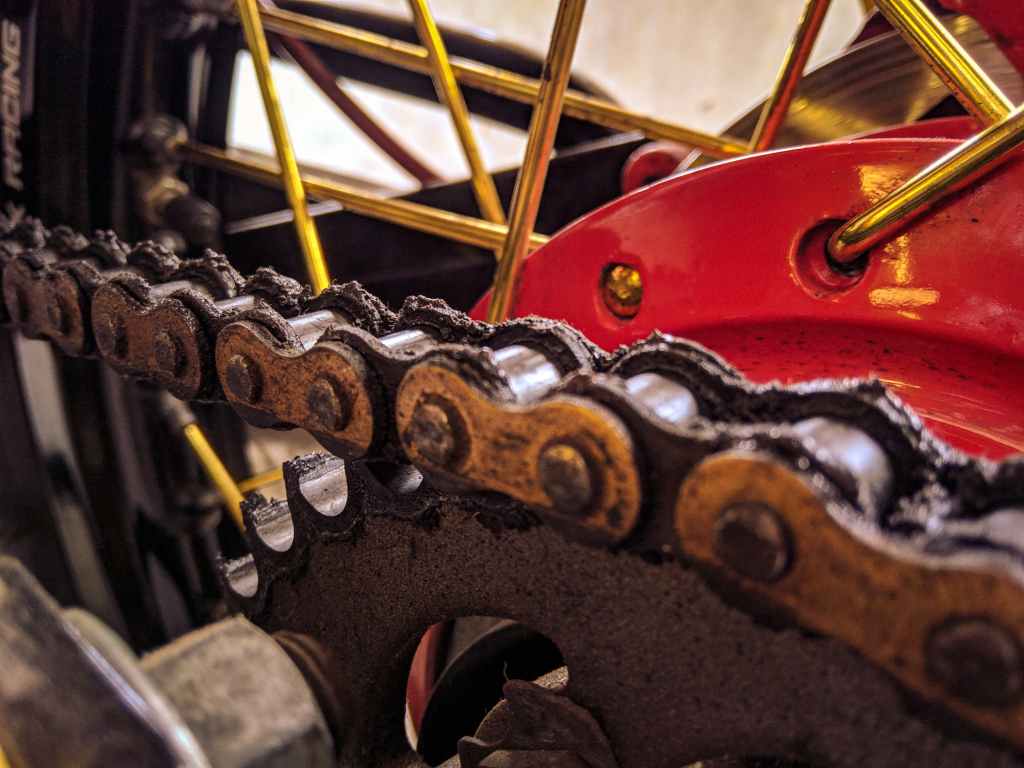
Lubing your bike chain is important and necessary, but it won’t do much good if your chain is already dirty and clogged with grit and dirt. Before applying any lubricant, make sure to wipe down your chain and remove as much gunk as possible. This is an important step that will prolong your drivetrain over time and maybe even lend you a few more watts of speed.
A dirty chain will not only cause possible inaccuracies in your shifting, it will wear down your components, such as your crank chain rings and cassette teeth, faster than you can say “clean chain.” Additionally, the friction that is lost with a dirty chain will impact how fast you ride.
That is why it is essential to wipe down your chain as much as possible with a dry or damp rag, then reapply lubricant (if needed). A key thing to note is that cycling componentry and chain lubes are all better made than they ever were in the past. So, it’s important not to overuse a chain lube. Too much is just as bad as too little.
The Negative of A New Chain
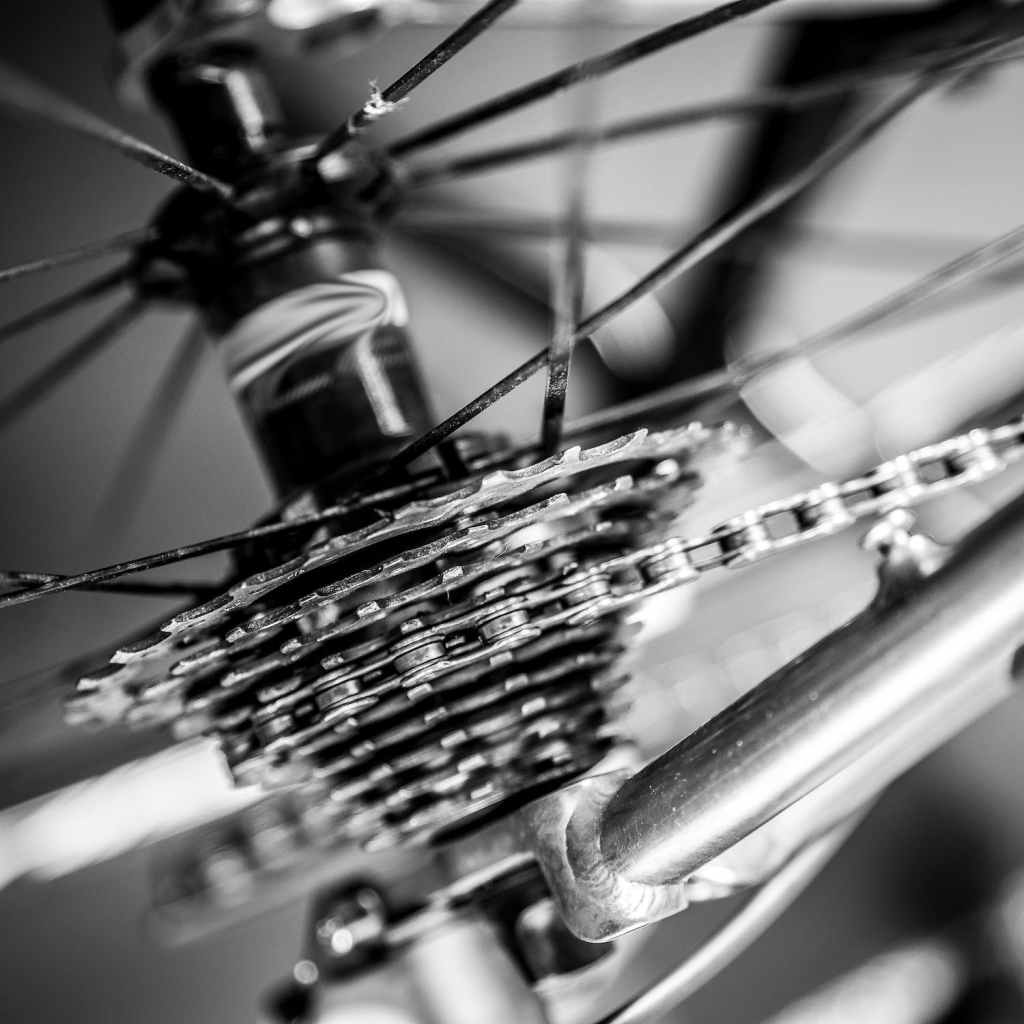
Unless you are putting a new chain on your bike, chances are it won’t look as good as the one pictured above, even if you do wipe it down after every ride. According to an article about bicycle chain lubes over at Bicycling Magazine, while adding a new chain to your drivetrain is a wonderful thing, it comes packaged with a factory applied grease.
The purpose of this grease is to keep the chain from rusting during shipping, storage, and display. It is not, as I mistakenly thought, an actual chain lube. It will actually cause the chain to wear faster, and road debris will be attracted versus deflected.
But the worse part is that factory chain grease will stop chain lube from adhering to your chain. So, before you put that new chain on your bike, make sure to remove that factory grease.
How to Apply Chain Lube and How Often
A bicycle chain is made of several pieces, specifically rollers that are linked by side plates into “chain links.” It’s the rollers that make contact with your chainrings and cassette. The plates on each side help to align the chain so it is straight and creates what is called a “chain line.” You’ll often here bike mechanics talk about this because if your chain line is off, your gearing/ shifting will also be off.
Chain lube should not be sloppily applied to the whole chain but just to the rollers. All that is needed is one drop of lube on each roller while you rotate the chain backward. In fact, it’s not necessary to lubricate each and every roller on the chain. You can also rotate the chain in the direction it will travel while you are riding, but you’ll need to have the bike in a work stand since your rear wheel will rotate.
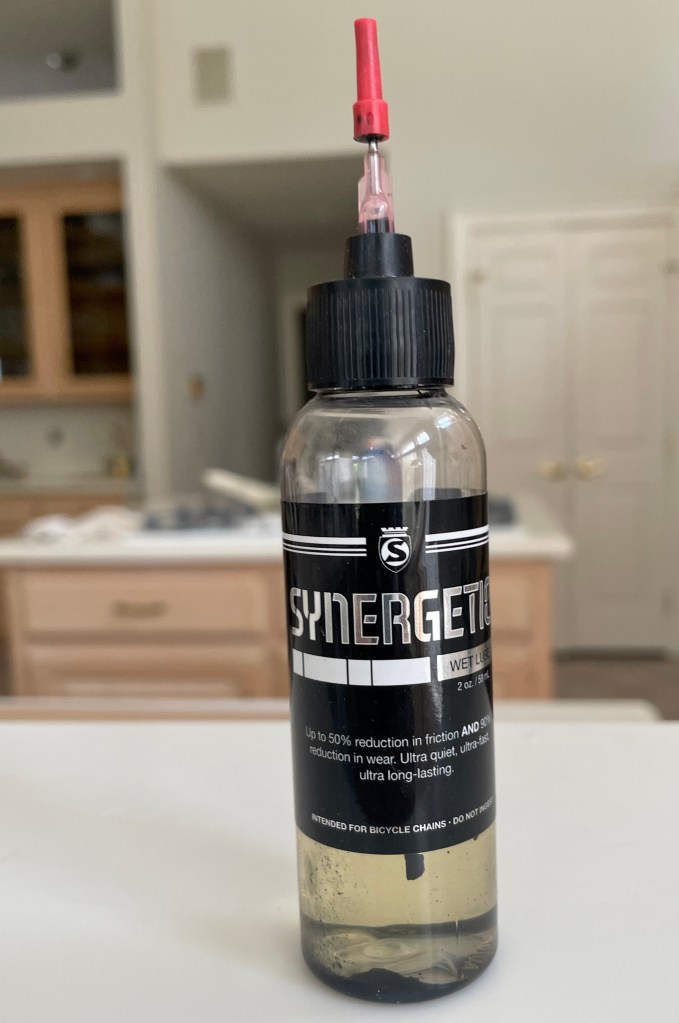
How often you apply chain lube is almost a matter of preference and how much you ride. If you use a good quality lube like Silca Synergetic (pictured above), you only need to reapply it every 60 – 150 miles. But if you’re like me, I like to relube my chain every other ride.
Just make sure, as mentioned, to wipe off any excess chain lube, and to wipe down your chain after each ride. That is ideally when you should reapply lube and not right before you head out on a ride. You need to give the lubricant time to setup and to penetrate the rollers, which is overnight.
Types of Chain Lube and Costs Per Bottle
There are primarily three types of chain lube on the market: Wet, Dry, and Wax-based lubes. Which lube you choose to use depends on where you live and the type of riding you do as well as the conditions you tend to ride in.
- Wet lube – Wet lube is made for the road cyclist and shouldn’t be used if you do any kind of off-road or gravel riding because it will attract dirt and debris. It is usually a thicker lubricant. In fact, as Dan Chabanov from his Bicycling Magazine articles states, “Wet lube performs well in very harsh wet conditions because they are more resistant to being flushed out of the chain. In these conditions, it’s better to have lube on your chain (even if it’s contaminated) versus having no lube.”
- Dry Lube – Dry lube is given that name because it goes on wet but dries quickly, which means you have to reapply it often. And dry lube is the lubricant that can assist in keeping your chain running clean, especially if you wipe away excess lube and wipe down your chain after riding.
- Wax-based lubes – The first thing to point out before launching into this discussion about waxed chains is that the two lubes mentioned above are dripped on and come in a bottle. Waxing a chain requires a crock pot (or a similar device), a new chain, and wax. While you may spend anywhere from $10.00 to $30.00 for a drip on lubricant, waxing will be much more expensive with costs running close to $300. However, riders rave about waxed chains. There is little to no friction and the wax keeps contaminants and other debris away.
Last Thoughts
Choosing the right chain lube for your chain isn’t difficult, and it is a ride essential because, yes, you should lubricate your chain. However, as already mentioned, it’s not necessary to do that all the time.
What will prolong your chain and your drive train is regular lite maintenance and wiping down your chain after each ride. And with everything in cycling having become so expensive, who doesn’t want their componentry to last as long as possible.


 Bicycle Day Trips - Bicycle Travel, Gear Reviews, Photography, Cycling News, and Commentary