It doesn’t matter whether you ride road or gravel, participate in a road race or sportive, or if you’re just an event or fitness cyclist, tire inflation is an issue all cyclists must eventually confront. And as cyclists, we all know how much it sucks to flat while out on a ride.
But what if you could adjust your tire pressure while you are riding and use that to your advantage and to prevent flats? Topping off air pressure in your tires (or even deflating it in small increments) may even improve your rides and lessen your fatigue. That’s the goal of Graava, a new company specializing in wheels where a cyclist can inflate or deflate their tires on the fly.
Who is Gravaa?
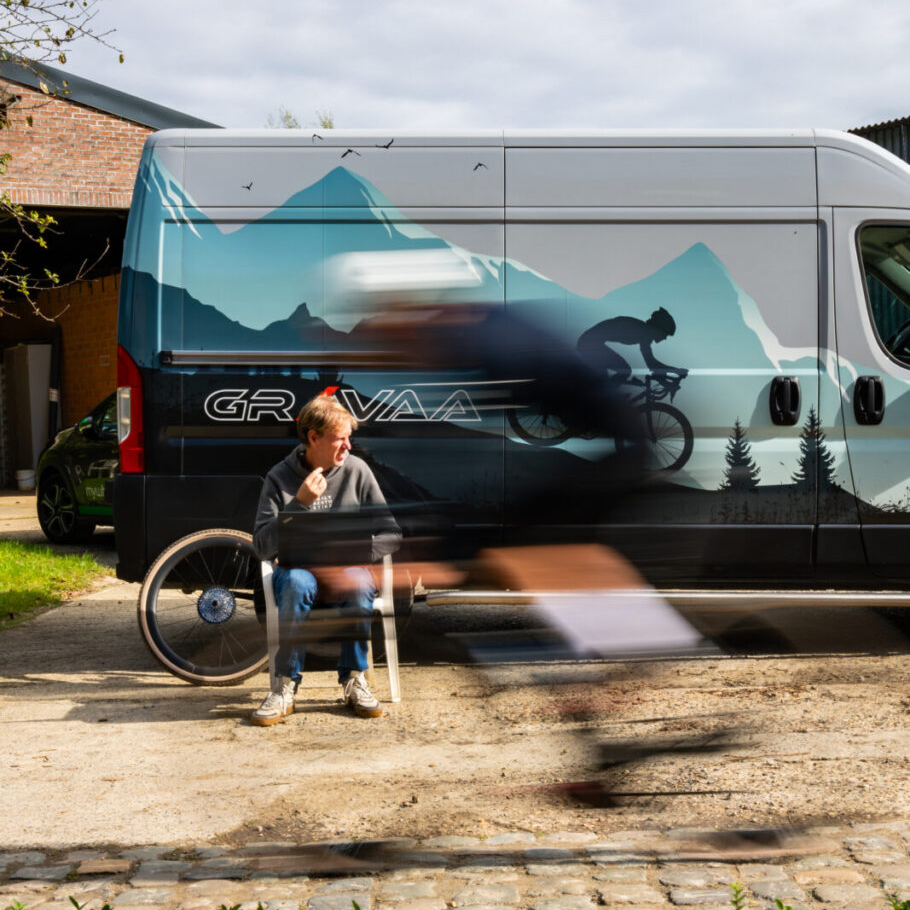
Gravaa is a Dutch company and the brainchild of Gertjan van Ginderen. In 2015, he was participating in a race that involved riding on both sand and tarmac and wanted to adjust his tire pressure as he hit different terrains. The only way to do this was to hop off the bike and either slightly deflate his tires by hand, or to use his CO2 inflator top off his tires.
Ginderen thought there must be a way a cyclist can adjust his tire pressure quickly and efficiently, and that is how Gravaa was conceived. With lots of research and a team of super smart engineers, Ginderen invented a mechanism that can be part of any wheel build that is “invisible, inaudible, and almost imperceptible, ready to adjust tire pressure to any terrain…optimum tire pressure without loss of speed and reduced risk of punctures.”
How Does Gravaa’s Self-Adjusting Inflation Work?
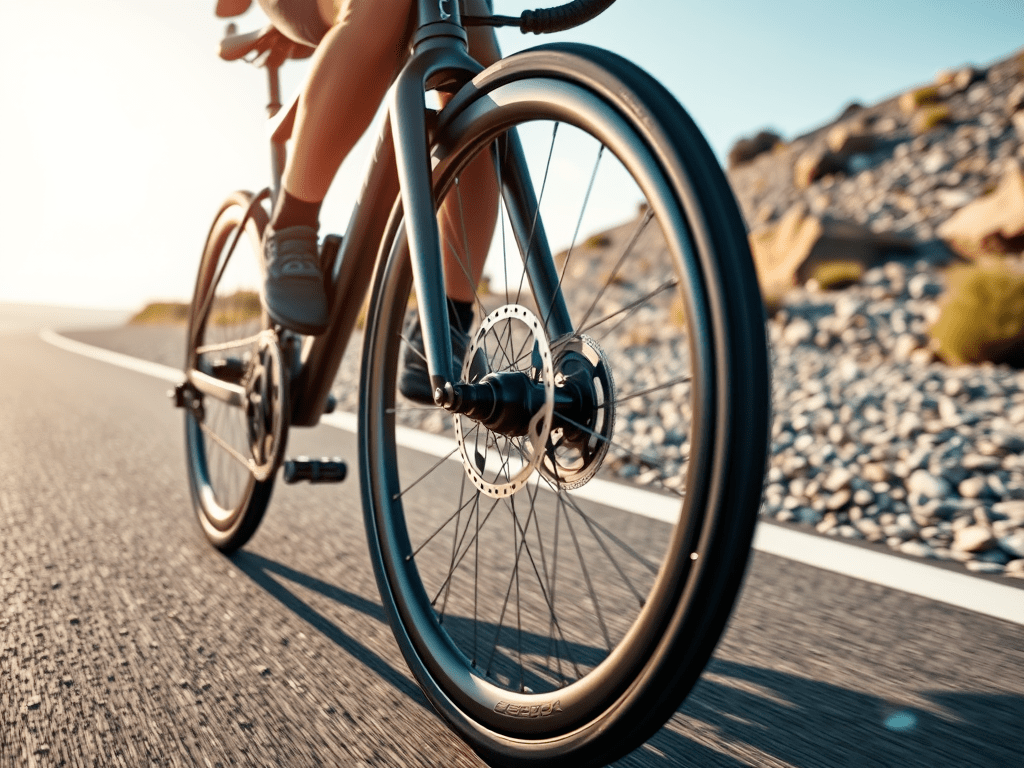
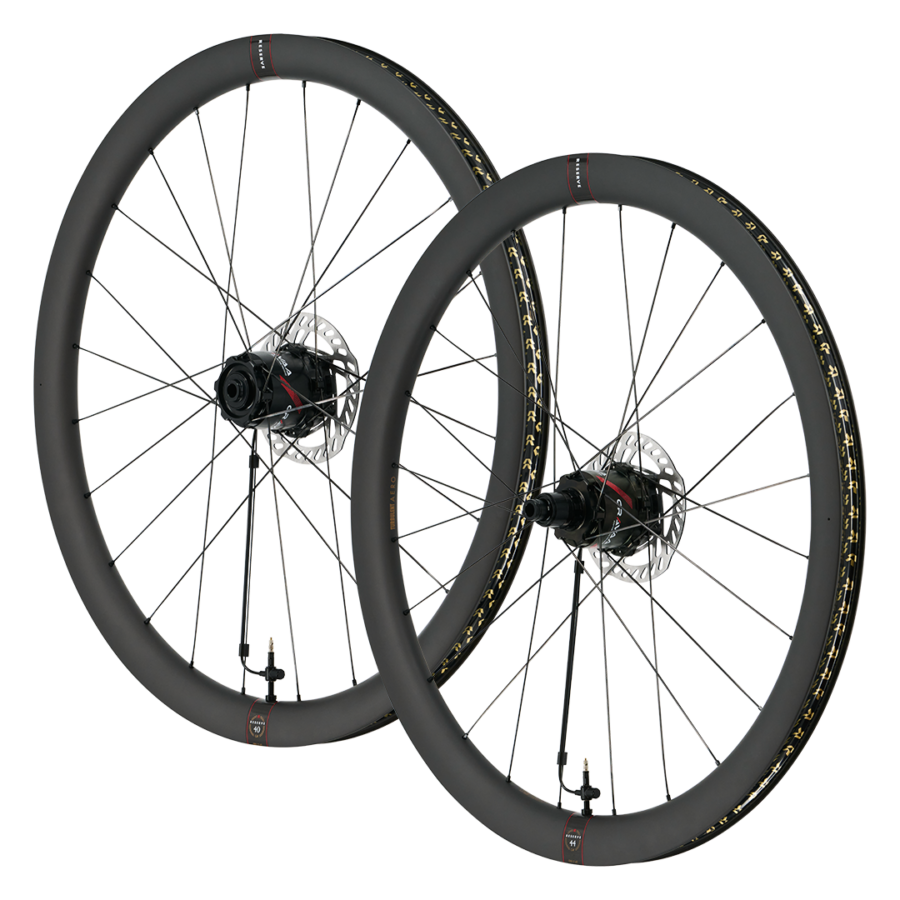
Gravaa uses what it calls its Kinetic Air Pressure System (KAPS). The system is built into a regular bike hub. When a cyclist rotates his cranks and his wheels begin to move (in other words, just riding), the pump inside the hub is activated.
An air hose connected to the hub that ends in a valve connected to the inner tube valve is how air is either added or subtracted. The cyclist can control how much inflation (air pressure) he wants in his tires, which can be achieved in one of two ways.
The first way is to set a designated air pressure through the Gravaa app that connects wirelessly to the hub. If during the ride, the cyclist’s tires begin to lose air, the Gravaa hub will correct for this by adding air pressure. The second way hands control of tire pressure over to the cyclist. He can inflate or deflate his tires through a handlebar-mounted switch while he is riding.
What Parts Go Into a Gravaa Self-Inflating Hub?
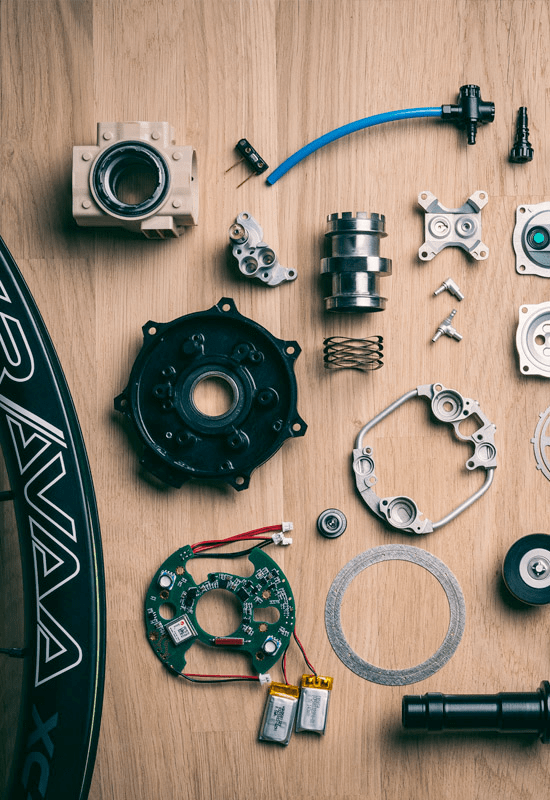
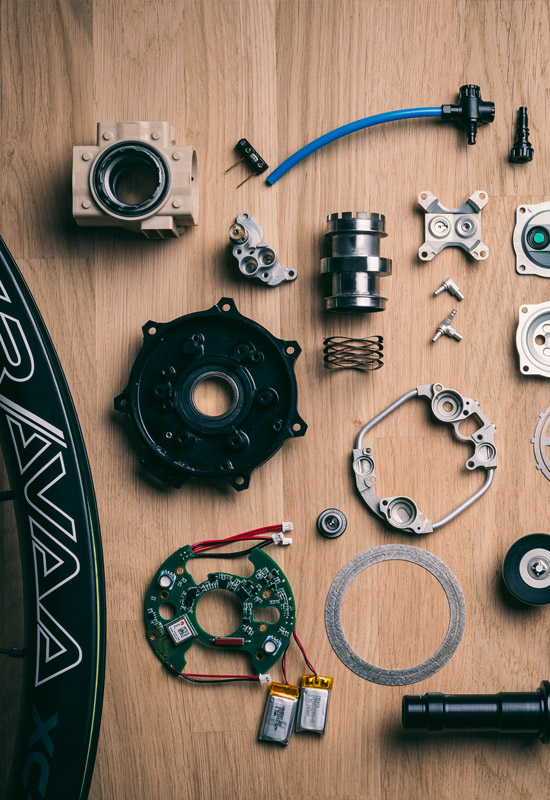
From the outside, the simple bike wheel hub doesn’t look complicated and its function is simple, which is to assist in the rotation of the wheel. But Gravaa’s hub is a little more complex. It has several parts to help it achieve its job of adjusting on-bike tire inflation.
These parts help the Graava hub to perform effectively and efficiently as a cyclist rides.
- Mini pump – powered by the rotation of the wheels
- Smart clutch
- Fast air supply
- Energy-efficient electronics
- Wireless connection – Bluetooth and ANT+ to communicate with your smartphone or bike computer (Garmin and Wahoo).
- Handy controls: the handlebar-mounted buttons to initiate inflation/deflation.
- Lightweight disc brake
Graava’s Wheels Installed with KAPS and Cost
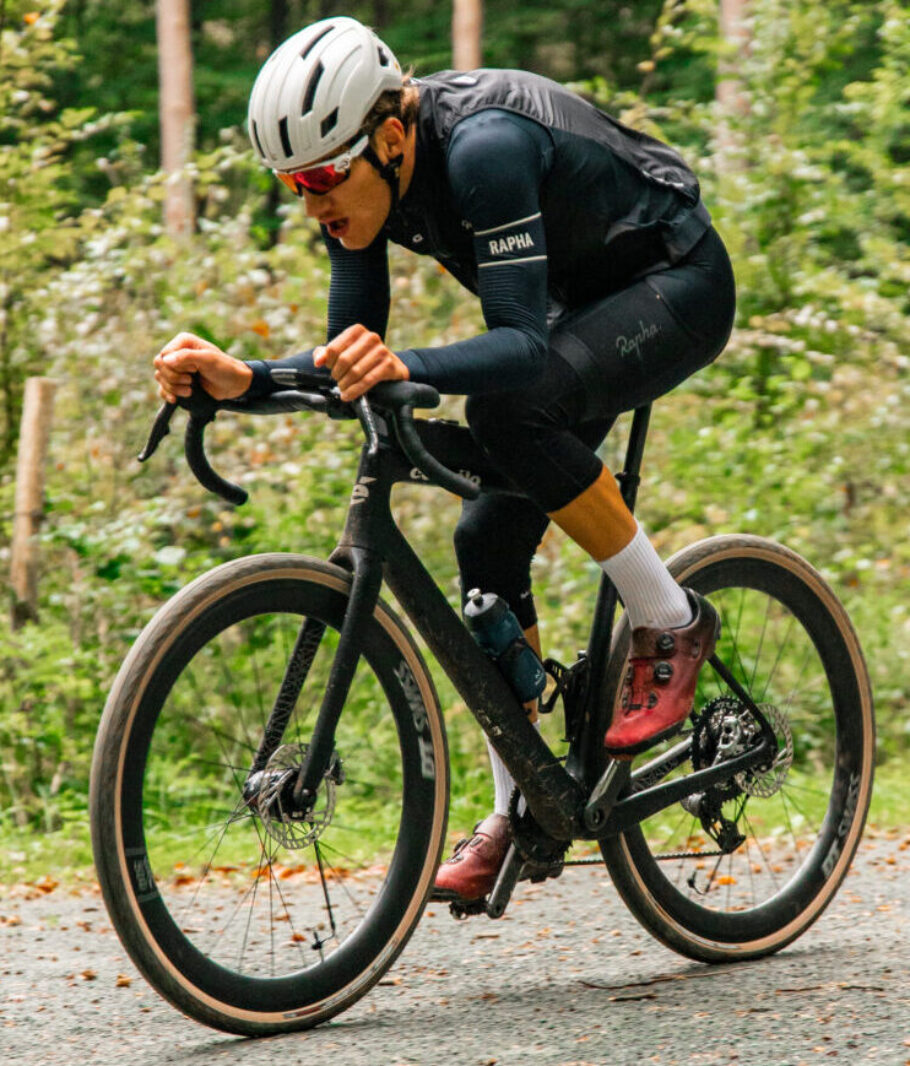
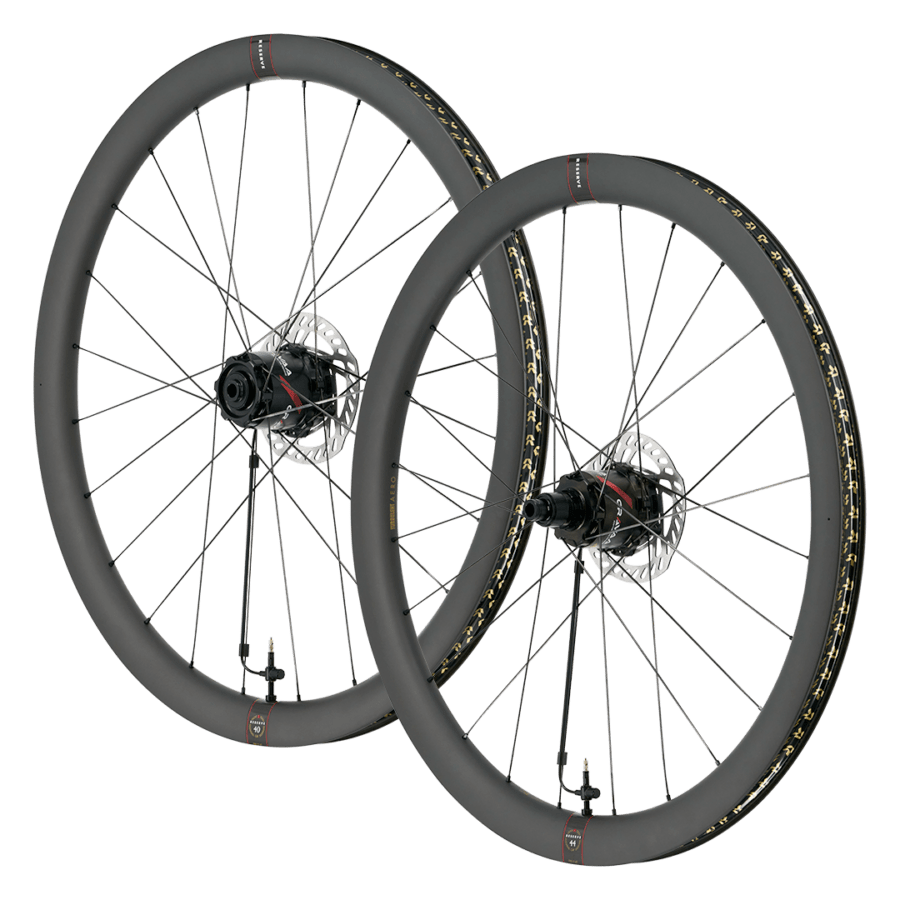
If you don’t have a set of wheels you want to be configured with Gravaa’s Kinetic Air System, the company currently offers three wheelsets that come with the system pre-installed. These wheels can be both ridden on the road or on gravel terrain but are very expensive.
If these wheels are accepted and adopted by the cycling industry, expect these prices to come down somewhat. Currently, these wheel systems have been demoed and used by pro teams, specifically Visma Lease a Bike. The wheelsets are as follows:
- GRAVAA x Reserve 40|44 GR – Price: €3.898,00
- GRAVAA x DT SWISS GRC500 – Price: €4.398,00
- Gravaa x Reserve 42|49 – Price: €3.898,00
Last Thoughts
Gravaa’s technology looks to be a game-changer for the world of wheels in the cycling industry. As already mentioned, if the fact of flat tires and faulty air pressure can be eliminated from the act of riding a bike, that would be a vast improvement.
While cost for a set of Gravaa’s wheels is definitely a deterrent, the company does say their pump system can be added to any set of wheels. That may significantly reduce cost but that’s hard to say. A price for doing that process isn’t listed on the Graava website.
Plus, Graava is not the only player in the self adjusting tire pressure game. Another company called Scope (funnily also a Dutch company) sells a similar product at the same price point.


 Bicycle Day Trips - Bicycle Travel, Gear Reviews, Photography, Cycling News, and Commentary