
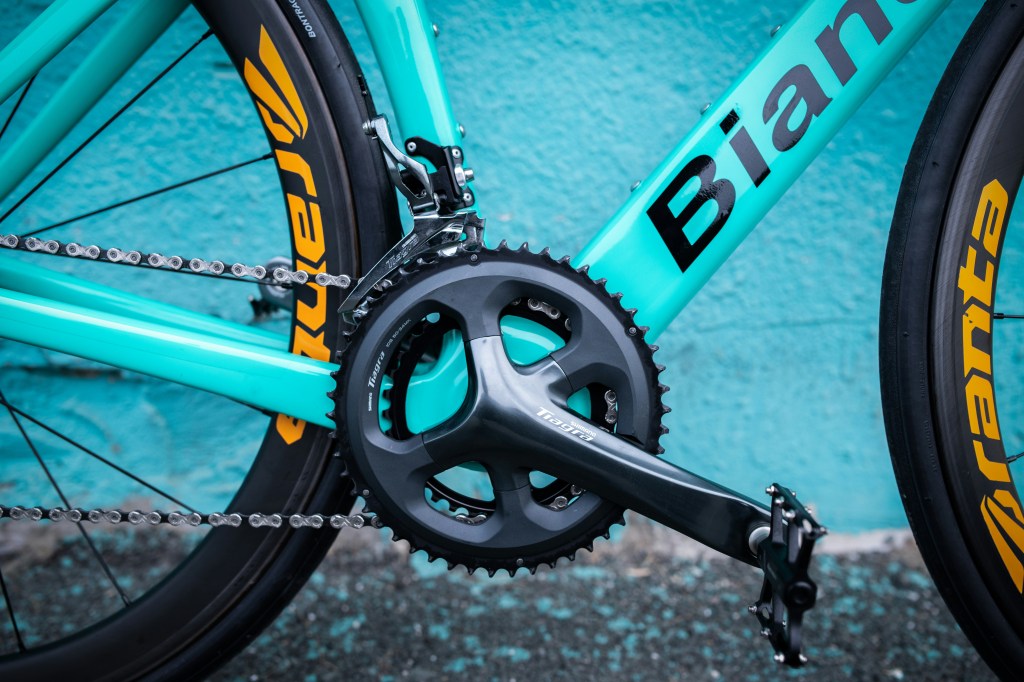
The origins and history of cycling are indeed an odd story. Take, for instance, the story of Bianchi, an iconic Italian cycling brand with very modest beginnings. Its story starts in the late 19th century.
Almost overnight, demand for its bikes grew along with its reputation. All it took was one race victory in 1899 to sew its ongoing connection to cycling, bicycle racing, and Italian culture seemingly forever.
Brief History of Bianchi

Edoardo Bianchi opened his first workshop in 1885 in Milan, he was only 20. But at that time, cycling was pretty far from his mind. Although he sold penny-farthings, he primarily sold surgical instruments.
But that all changed in 1899 when Gian Fernando Tommaselli rode a Bianchi bike to victory in the Grand Prix de Paris. From there, Bianchi and his bikes grew in popularity and demand. Even the king and queen of Italy wanted to ride his bikes, and he soon became known as the official supplier of the royal family.
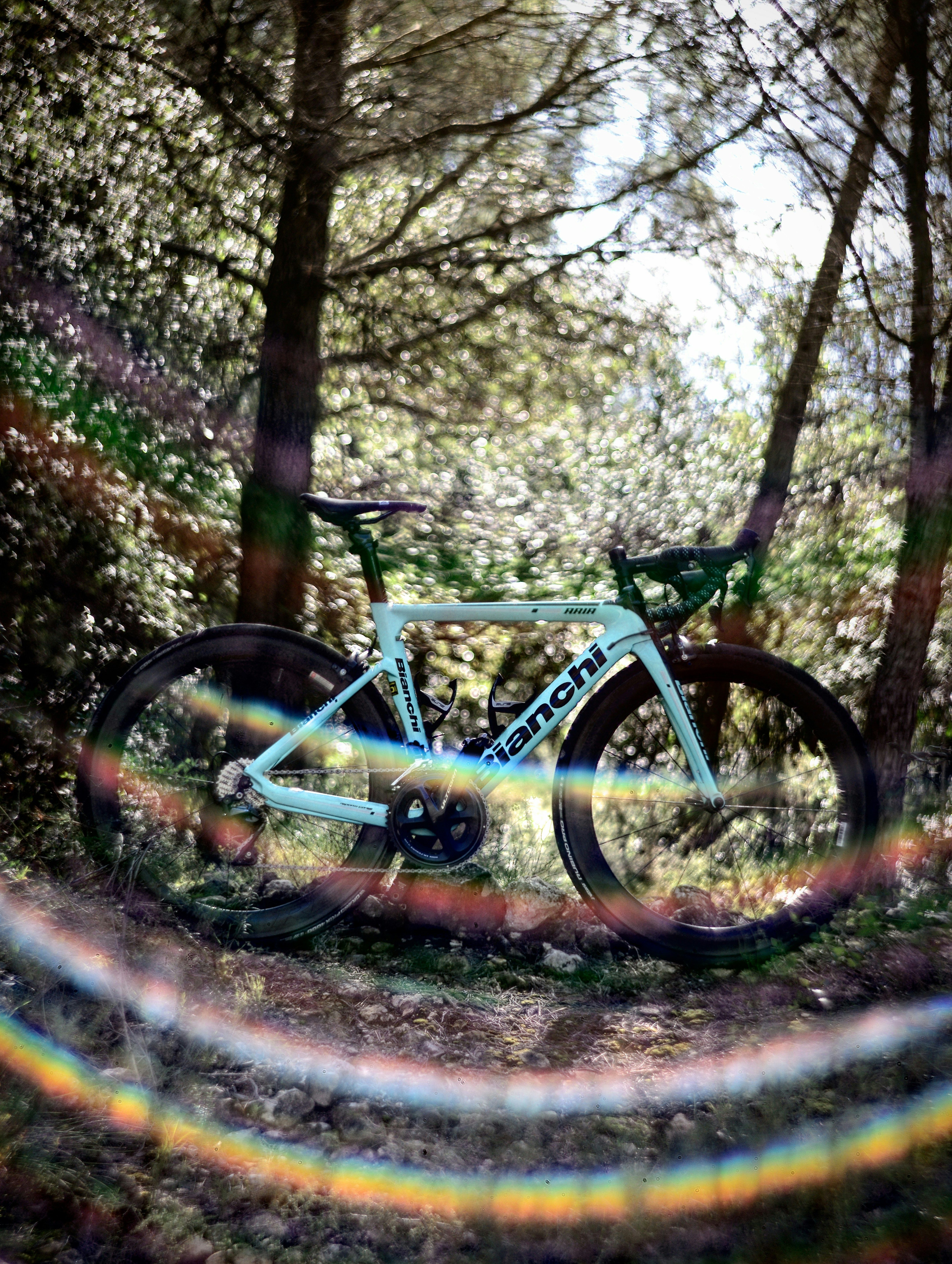
By the time of the First World War, Bianchi and his bikes became known as vehicles of speed and efficiency. He invented the first full-suspension bike for soldiers to carry heavy equipment into battle. At this time, Bianchi’s signature color scheme called Celeste was developed, a light green almost turquoise, which would come to identify his bikes.
The Bianchi Brand in the 1940s to 2000s
By the 1940s, after Bianchi and his CEO Tomasseli had both passed away, Bianchi’s son Giuseppe carried on with the business. This was when the fabled era of Italian cycling was born with Fausto Coppi aboard a Bianchi. He won the Giro d’Italia in 1947 and the Tour de France in 1949.
By the 1970s, Bianchi, which also made motorcycles, had changed the world of cycling. Cycling as a sport also changed with sponsorships coming in. Bianchi became an even stronger brand, so much so that it built a 75,000 square meter factory in Bergamo to meet demand.
By this time, the company had been bought and changed hands many times, only the Bianchi name and its color scheme remained. By the 1990s, Bianchi reached the zenith of the cycling world as Marco Pantini won both the Giro and the Tour de France in the same year, 1998.
Bianchi in the 2000s and Beyond

As the 2000s dawned, Bianchi changed with the times. It not only made road bikes but also mountain bikes. Julien Absalon took the gold medal in mountain biking at the 2004 Athens Olympics. By 2010, the famed Italian brand also continued with cycling innovation by introducing frames that were stiffer and took advantage of the latest materials, specifically carbon fiber.
On the road, Bianchi sponsored Jan Ullrich and his team. But the innovations by the famed builder continued as it revolutionized cycling with further technical advancements. It introduced “Countervail technology, a patented carbon fiber developed for NASA aerospace operations, able to cancel up to 80% of the vibrations.“
Last Thoughts

For 130 years, Bianchi has survived. Over the years, it innovated new cycling technology, supported cycling champions in their victories, and became associated as fast, efficient, and well-built. It is no wonder that Bianchi continues to be such a strong presence in the peloton and mountain bike circles.
In fact, Bianchi has become so synonymous with Italian culture, it opened its own branded cafes in Stockholm, Milan, and Tokyo. That’s pretty impressive for a bike builder whose founder opened his first shop selling surgical instruments.


 Bicycle Day Trips - Bicycle Travel, Gear Reviews, Photography, Cycling News, and Commentary