

If you’re a road cyclist, you know how challenging it can be to find lightly trafficked roads to ride. Of course, we can look up routes on Strava or Ride With GPS, but these roads might not always be the safest. But what if you had a device that could tell you what roads to take that are free from traffic (or at least ones with little traffic)?
Enter ProxiCycle, a device developed by a team at the University of Washington, Seattle. The device will supposedly analyze the roads you ride, then suggest ones that are less busy. It will be like having a smart Google Maps assistant in your pocket (or on your handlebars) that transmits messages about road safety right to your phone.
What is ProxiCycle? What Does It Really Do?

ProxiCycle is a sensor that plugs into the left handlebar and records when a car comes close to a cyclist (within four feet). Currently, the sensor is made of 3D printed plastic. Installed within its small body are two sensors and a Bluetooth antenna. The device then transmits data to a cyclist’s phone. An algorithm determines if the object is a passing car versus a pedestrian, another cyclist, or a tree.
The UW creators state that it cost about $25.00 to make this sensor. But ProxiCycle hasn’t been patented and is not yet commercially available. In fact, the sensor is still very much in the testing phase. While this device was made for the everyday casual cyclist, all cyclists could benefit from the use of the device, especially road cyclists, from the novice to the hardcore.
How has ProxiCycle Been Tested?
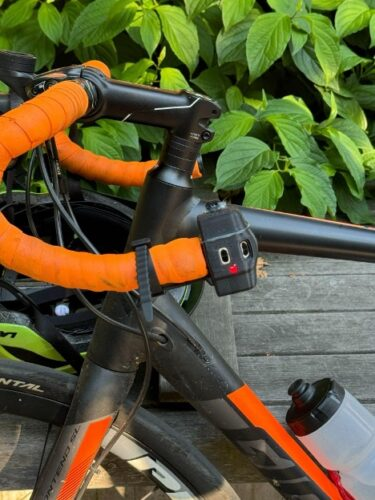
The UW team initially tested the system for two months with data collected from 240 rides by 15 cyclists. They analyzed close passes and collisions: all 2,050 of them.
The team then interviewed this same group of cyclists, who would give them feedback on how safe they felt in different riding situations. The researchers also used footage collected from handlebar-mounted GoPro cameras.
The team also interviewed an additional 389 people in the Seattle area. They were cyclists of different levels and abilities. However, all the respondents stated that the single biggest factor that would keep them from riding on certain roads was the potential for interfacing with motor vehicles.
Does the ProxiCycle Work? How Much Will It Cost? When Will It Be Available?

The UW team states, “Deployed at scale, the system could support mapping or navigating cyclists on safer bike routes through cities.” The hope is that ProxiCycle’s data would be integrated into current mapping programs, specifically something like Strava, which is prominently used by cyclists.
Currently, that app records bicycle rides and routes, but it doesn’t show a cyclist if the roads he will ride are busy, have low traffic, or are completely safe.
While the team is still in the testing phase of the sensor and algorithm that measures the data, it did present its findings at the ACM CHI Conference on Human Factors in Computing Systems in Yokohama, Japan.
But even though the team has tested its device in a “parking lot, with a car passing at different distances…,” it still hasn’t looked at other collision data for when car doors are opened in front of riders or situations where there might be heavy pedestrian traffic.
That said, one participant in the study said that ProxiCycle suggested “a great bike lane on a quieter street, just one block north” of a busy, multi-lane road she always used. Unfortunately, the ProxiCycle is still just a prototype and there is no mention in the source article as to when this device will be available for purchase.
Last Thoughts

Thousands of cyclists are killed or injured by cars every year in the United States and in other countries across the world. ProxiCycle, if successful, would be a game changer for novice, casual, and hardcore cyclists and could, potentially, save lives. But even more importantly, the device would give cyclists peace of mind that they can feel safe on the road.
While the sensor cost the UW team $25.00 to assemble, expect that cost to go up if the device ever becomes commercially available. Still, this sensor would be a must-have device for all cyclists, and the commercial sales possibilities would be amazing. Who knows? Maybe we’ll see a ProxiCycle (or whatever it ends up being called) in the shops sometime soon.

Share this:


 Bicycle Day Trips - Bicycle Travel, Gear Reviews, Photography, Cycling News, and Commentary
