
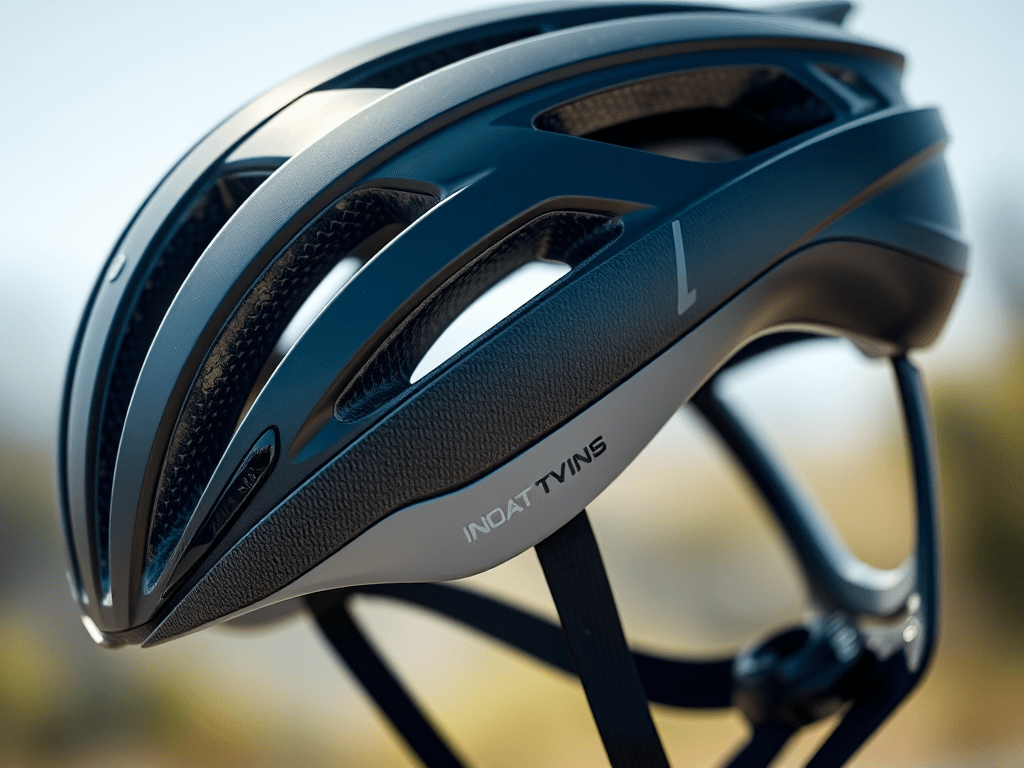
The latest technological advances are influencing sports of all kinds. For example, a couple of weeks ago, a new type of baseball bat was released for use by professional players that gives them the ability swing faster but harder. In the cycling world, science, engineering, and design have always played a role from its very beginnings.
Think steel, aluminum, titanium, carbon fiber, and even bamboo for its use in bike frames, changes in wheels, bike parts, fabric for cycling apparel, just to name a few. More recently, advances in the use of 3D printing for helmets, saddles, and even bike frames are slowly changing the cycling industry. But the U.K. company Ventete has gone one step further and uses air as a major element in its products. It has designed a cycling helmet that is fully inflatable.
Brief History of the Cycling Helmet
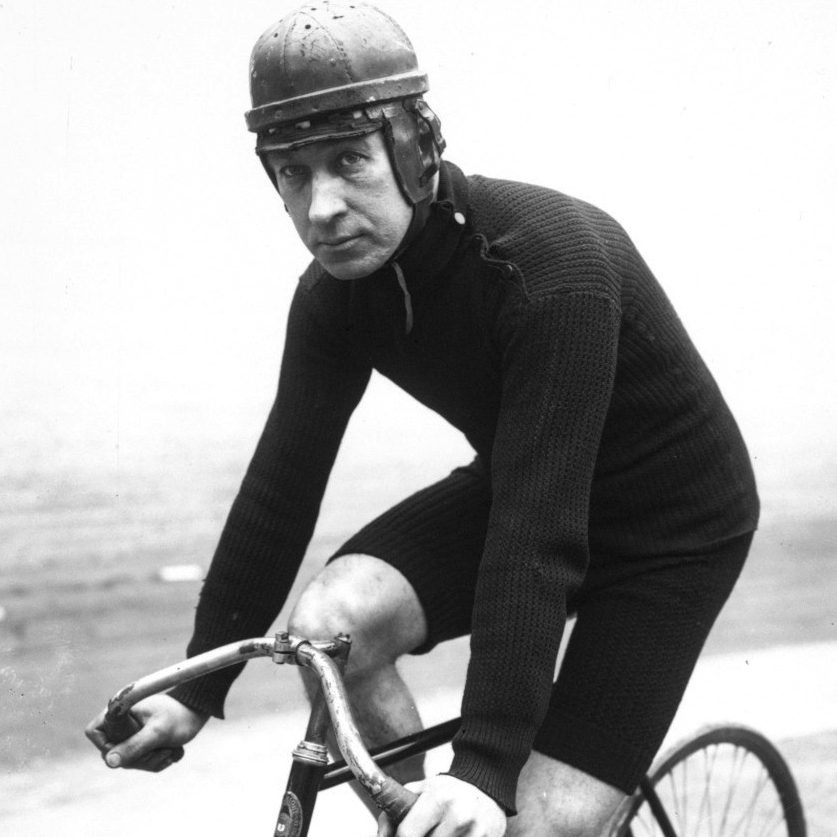
Some form of head protection has been worn by bicyclists since the early 1900s. The first helmets looked much like the helmets worn by football players of the era and were made of leather. Up until the 1970s, helmets were “…made of rubber bars covered in leather. This offered acceptable protection from scrapes and cuts, but only minimal impact protection…”
But cycling gained more popularity in the 1970s and the cycling helmet evolved with it. MSR (Mountain Safety Research) and Bell Sports were the first companies to develop a helmet for cyclists with “expanded polystyrene foam liners for motorcycling and motorsport helmets and [that] had hard polycarbonate plastic shells…”
The problem with these helmets is they lacked decent ventilation and were devoid of any safety standards. But technology was moving helmets forward. By 1990, a new design and construction created “a very thin shell… during the moulding process. This rapidly became the dominant technology, allowing for larger vents and more complex shapes...” The last real big changes came with retention and fitting systems, then later helmets were made of lighter materials, such as carbon fiber padded inserts.
Who Is Ventete?
Ventete, as mentioned earlier, is a U.K. company, but it manufactures its products in Switzerland. Ventete states that its mission statement is to design and build products for “contemporary movement.” The company is new as of 2025, and right now, its inflatable helmet is the only product it offers.
With movement in mind, Ventete reimagined the cycling helmet and what it could be starting in 2014. Colin Herperger, an architectural designer, spent 10 years on the helmet in order to make it portable but safe. Cycling helmets, while lightweight, are still bulky if you’re at the coffee shop after a morning spin or the grocery store. The aH-1 is made for all cyclists, not just the Lycra-spandex hardcore crowd on ultra expensive road bikes.
How Ventete’s aH-1 Helmet Works

The aH-1 was tested against 30 helmets available in the London area. Ventete’s helmet beat them all for impact incidents by 25%. Maybe that has something to do with the unique construction of the helmet.
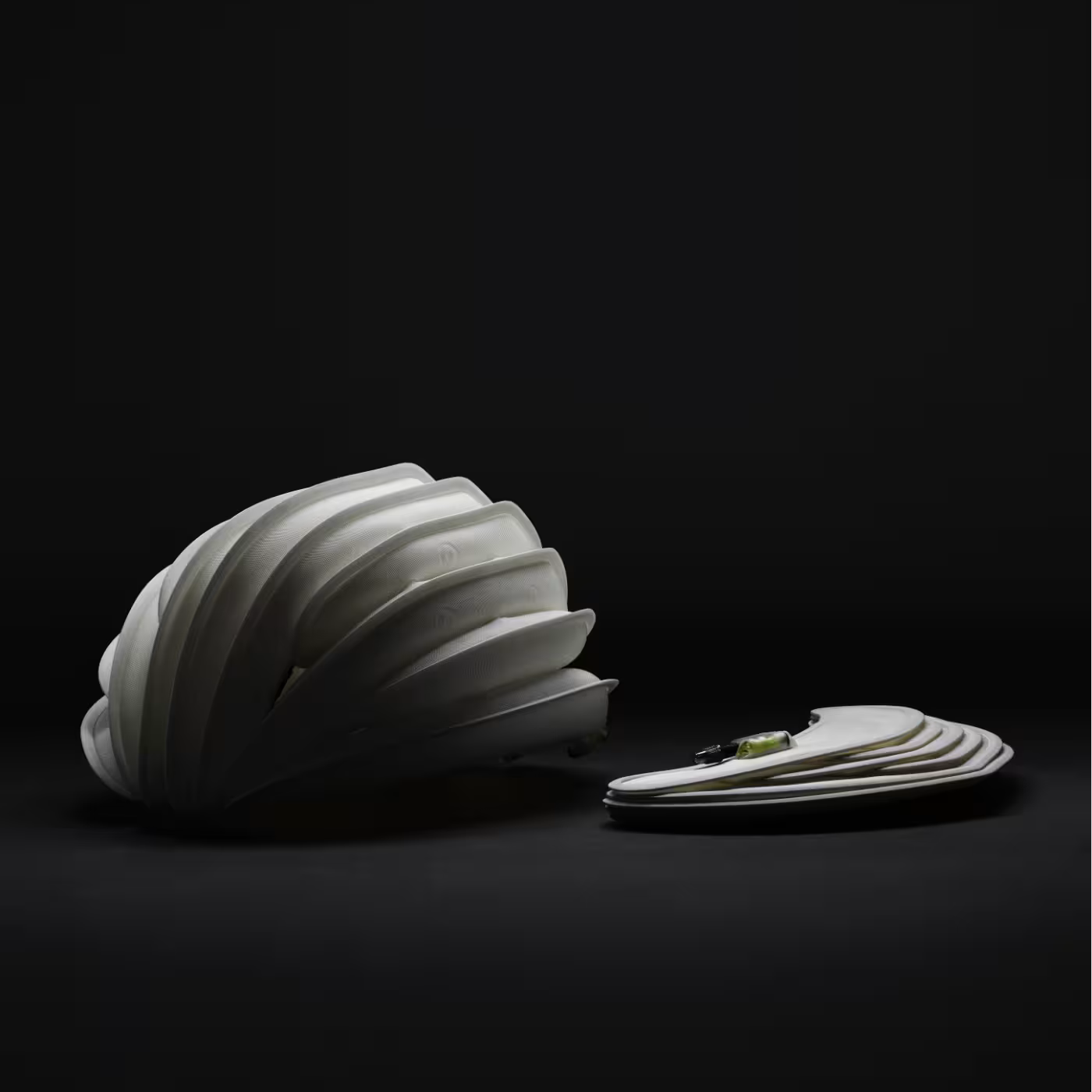
The aH-1 has 11 woven nylon bladders. Ribbed fiberglass forms the shell of the helmet, which is both lightweight and strong. A half-sized Presta valve is where inflation takes place when the included handheld electric pump is attached. 30 seconds later, the folded-fan takes the shape of a bicycle helmet. When it is deflated, the helmet fits in a long, slim (and very portable) bag/ pouch.
So far, sales of the helmet have been incredible. The first iteration sold out in 10 minutes, which is amazing considering its high price point of 350 Euros (around $400). Ventete has also won design awards for Innovation in Sport and the Red Dot Design Best of the Best award.
Last Thoughts

In the 208 years since the bicycle was invented, it has changed immensely. Bicycle helmets, which have been around for almost as long, haven’t changed, it could be argued, as much. From the 1990s to 2025 is a long expanse of time.
That point illustrates that safety, comfort, and weight were never considerations for early helmet designers. Functionality was more important.
Today, functionality, comfort, safety, and more go into helmets and every other facet of cycling. Ventete’s helmet could be one of those rare catalysts that cycling needs to put more people on bikes.

Share this:


 Bicycle Day Trips - Bicycle Travel, Gear Reviews, Photography, Cycling News, and Commentary

