

The 1970s were a time of change in the world of cycling. Many bike manufacturers made their bikes out of steel while a few outliers ventured into materials like aluminum and, eventually, carbon fiber.
Cannondale, an American bike builder, chose to focus on both aluminum and carbon fiber for its bikes. Bikes, however, were not initially the company’s primary area of concentration.
The Cannondale Bicycles Story

Joe Montgomery and Murdock MacGregor founded Cannondale in 1971 in Wilton, Connecticut. But bicycles are not how the company gained recognition in the bicycle industry. The first things the company made were a bicycle add-on known as “the Bugger.”
Despite that horrible name, the bicycle trailer, which was a more accurate description of its intended purpose, could be attached at the back of the saddle and be used to tow various objects. The trailer exploded in popularity with requests from over 2,500 bike dealers.
In fact, “in less than six months Cannondale became the world’s largest manufacturer of lightweight bicycle bags.” This success allowed Cannondale to delve into the backpacking and camping areas.
Cannondale Become Bicycle Builders
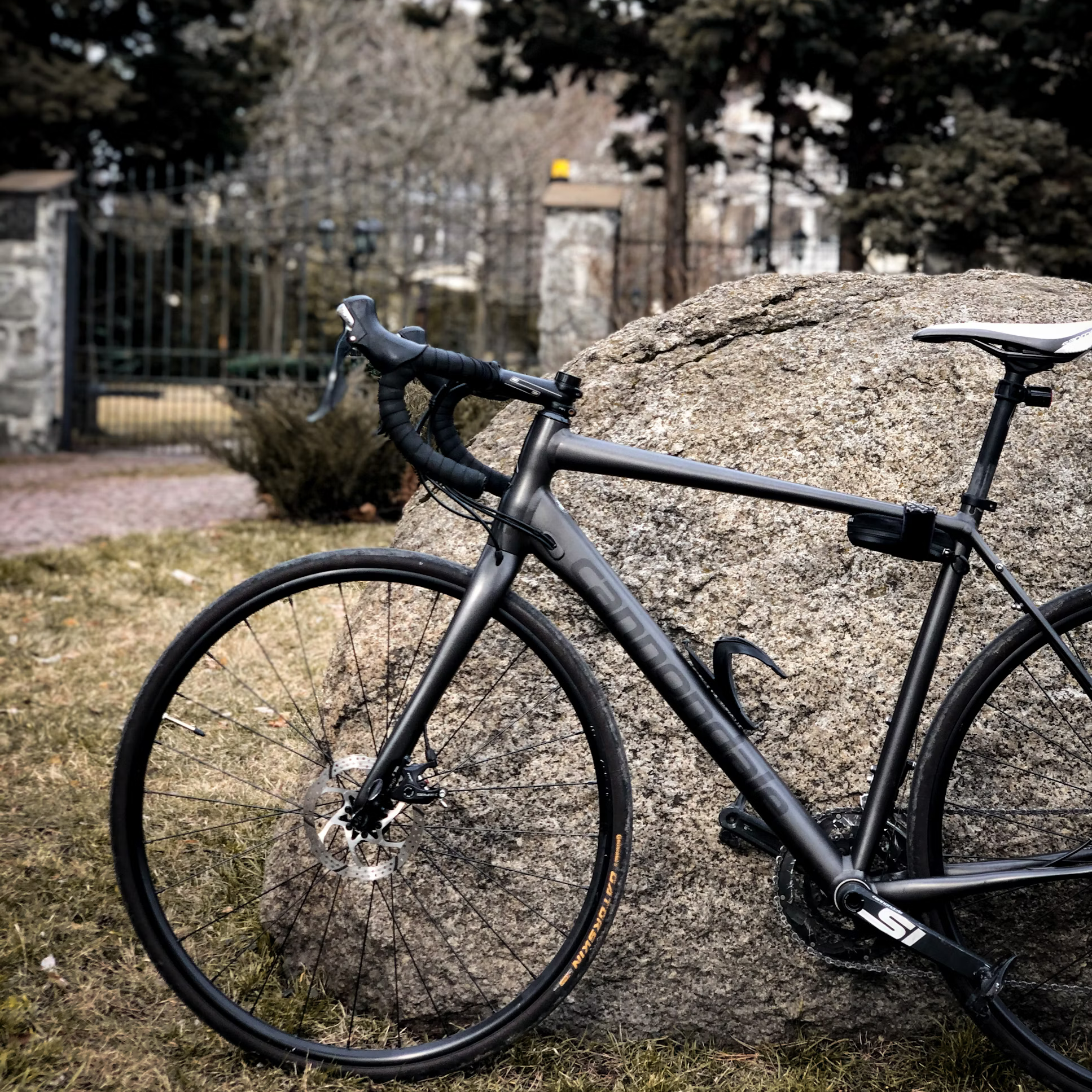
It was Todd Peterson, however, another designer/ inventor with the company, who developed how to weld bicycle frames and, thus, Cannondale entered the world of bicycle building. For many years, the company’s bikes were all handmade.
At the time, many bicycle manufacturers chose to use steel and titanium for their bikes. Cannondale, on the other hand, utilized aluminum and carbon fiber, two materials for which they were considered innovators.
The company’s name was inspired by a train stop in Wilton, Connecticut. The name was, in fact, “coined…while looking at a rusty cannon inscribed “dale” and the sign on the Cannon railroad crossing.”
Cannondale Was The First Bike Manufacturer to Use CAD and To Develop Industry Changing Components

Into the 1990s and through the 2000s, Cannondale continued on its course of innovations that shaped the bicycle industry. While they specialized in road bikes, the company also delved into mountain bikes, electric bikes, and bicycle components.
Cannondale, for instance, was one of the first bicycle manufacturers to use CAD (computer Assisted Design) to aid in building its bikes. This allowed them to make a frame that weighed just 2.8 pounds. At the same time, it developed the BB30 bottom bracket. That added stiffness for both the frame and its proprietary crankset known as the Hollowgram.
Cannondale was also the first bicycle manufacturer to make a suspension fork for mountain bikes. And it worked with Gary Fisher to develop the 1 1/4 headset standard.
Cannondale’s Pro Team Sponsorship

While bicycle manufacturers, such as Cannondale, make their bikes for the everyday rider, bike builders get the most recognition of their brand when they sponsor a pro or amateur team. According to Outside Magazine, sponsorship occurs in the following way:
By the mid-1990s, Cannondale had become a successful brand and was known for its innovations and influence on the cycling industry. As a result, from 1994 to the present day, Cannondale sponsored 13 pro road cycling teams and 7 pro mountain bike teams. Today, the main pro team it sponsors is EF Education Pro Cycling, both the men’s team and the women’s team.
Last Thoughts

For 55 years, Cannondale has made bikes while tirelessly innovating for road, mountain, and other bikes. The innovations it has introduced have helped to shape the industry and point it in a successful direction.
The fact that the company has not only been interested in bike building but in the engineering, functionality, and overall improvement of the bike has kept it on the radar of both pro teams and everyday cyclists even today. It’s not hard to imagine that Cannondale won’t continue to push ahead with what bikes and componentry can do into the future.

Share this:


 Bicycle Day Trips - Bicycle Travel, Gear Reviews, Photography, Cycling News, and Commentary