
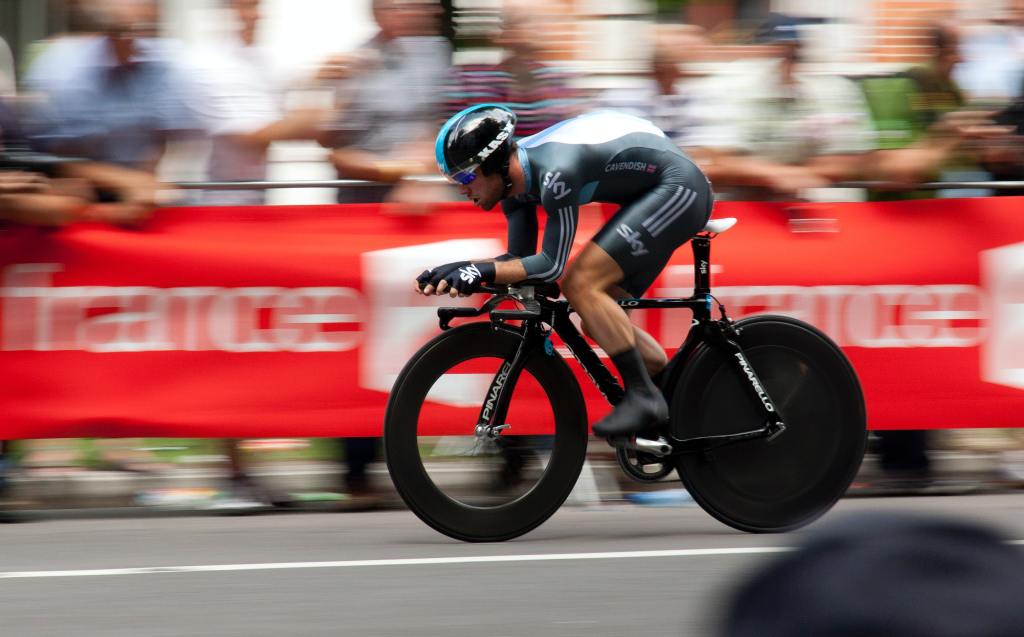
Even though I’ve been a very active amateur bicyclist for many years, I never really considered myself an athlete because I didn’t race competitively. I just quite accidentally found a sport in cycling that over time I fell in love with.
From that point forward, though, cycling began to influence my overall lifestyle. I prioritized nutrition, watched my weight, tried to stay fit, and measured my BMI. I rode my bike several times a week and participated in a lot of one-day events. Still, I never thought of myself as an athlete. It turns out, that viewpoint was incorrect.
Through Cycling, I Became An Athlete

As I became a stronger rider and my fitness improved, I traveled to places in the United States specifically to bike on vacation or to ride events like Gran Fondos where the organizers chip you and give you a number to pin on. That’s about as close to a race I’ve ever been.
I even went to Italy to bike the Giro d’Italia roads. That trip was just wonderful, challenging, and stunning. Still, that was not a race but an expensive group ride with hotels and incredible food and wine.
After all that activity, did I see myself as an athlete? The answer was still no. But according to Chris Carmichael, a former pro cyclist and founder and owner of Carmichael Training System (CTS), if you have done any of the things I mentioned above, you are definitely an athlete.
What is An Athlete?
The Oxford English Dictionary defines an athlete as someone who is “A competitor or performer in physical exercises or games.” So, if that is the case, then maybe I am an athlete after all. While not a “competitor” in the true sense of what that word alludes to, I do perform “physical exercises.” And in most instances, I always compete against myself.
Chris Carmichael states in his post “Hell Yes, You’re An Athlete,” quite eloquently, I might add, that you’re an athlete “who happens to ride a bicycle. Moreover, you are a person who rides a bicycle and has a family and a career, and an entire life off the bike.”
In other words, I am the type of athlete who doesn’t make a living as a pro competitor but who loves the sport for what it brings to my body and mind.
Purpose Driven and Goal Oriented Athletes

When I was a kid, I rode my bike everywhere, played baseball, played flagged football, and did chores. As I got older and entered high school, I played baseball, played golf, and was on the wrestling team (I was horrible at that, btw).
I wasn’t cycling at that time but rediscovered the sport later in my life. Through all that, I suppose I was a type of an athlete but not a serious one. Truth is, there are many types of athletes. Some serious athletes spend all their time training to compete at a professional level. That is how they make their living.
In contrast, some casual athletes perform an activity such as running, cycling, basketball, swimming, or whatever to stay fit, practice a healthy lifestyle, achieve certain goals, and even give their lives direction and purpose and do something fun for their mental as well as physical health.
What Makes an Athlete?
Earlier in his post, Carmichael says ” Speed, distance, and power output don’t make you an athlete. If you’re getting out there, getting it done, and having fun, you’re an athlete.” That is an important distinction.
I ride my bike because I love doing it. Nothing I’ve found compares to that feeling I get from doing a good, sweat-inducing ride. It’s where I also clear my head. But to me, the most important point is that I usually also have a ton of fun.
Last Thoughts
Athletes come in many shapes and sizes and they practice or “perform” different activities. If fitness, nutrition, health, and setting or achieving goals are important to you, and you achieve them by participating in an activity a few times a week, you are an athlete.
As Carmichaels says, though, “Of course, you could be a better athlete, which is why we train, recover, fuel up properly, and work with coaches. Improving your performance level strengthens your identity as an athlete – to yourself, regardless of whether it changes how others identify you – and that has a positive impact across other areas of life.”

Share this:


 Bicycle Day Trips - Bicycle Travel, Gear Reviews, Photography, Cycling News, and Commentary