

No doubt that technology can be a great thing, and the assistance it gives us in everyday life is unmistakable. Nowhere is that more true than in cycling where tech advances have greatly enhanced and improved various aspects of the sport. One of those advancements, cycling computers are, at times, much maligned for sapping the joy from the beautiful simplicity of riding a bike.
That’s even more true for the use of apps on our phones like Strava where riders risk their safety for a KOM accolade. The purists, of course, say cycling computers or cycling apps are not needed. They are just expensive luxury items, don’t add anything, and distract you from your surroundings. I would both agree and disagree because a cycling computer (or even an app) can tell you information that can assist you in improving (and even maybe have more fun) overall as a cyclist.
Brief History of Cycling Computers
The first cycling computer was invented in 1895 by Curtis V. Heeder. It had a cable extending down to the wheel to measure the number of rotations. This helped to tell a cyclist how many miles he had ridden. As time went by and technological advancements were made, “cyclometers,” as they were first called, could measure distance and speed.
Today, cycling computers not only measure speed and distance but cadence, heart rate, altitude, tell you when to drink, synch with your phone, and all this information is delivered wirelessly. But what’s the real purpose of a cycling computer? Is it just a way of casually keeping track of what you’ve done on a ride or a serious device for training?
Purpose of Cycling Computers
A cycling computer can be used in a casual way or as a serious training device. For the elite athlete or pro cyclist, for instance, it can be useful for tracking heart rate or measuring cadence and speed on a climb. In other words, it can indicate his level of fitness and areas where he needs to improve to become a better cyclist.
But what about those of us who aren’t racers and are just interested in knowing how many miles we rode and other tidbits of information? Cycling computers can be useful for that as well.
They can help you to see the improvements you make (or improvements you could make). In other words, it’s a device that allows you to compete against yourself. You can set reminders on it to tell you to drink regularly, and you can see how long a climb is and how long it will be before you get to the top. Today’s cycling computers can even integrate with the componentry on your bike so you can see how many times you shifted during a ride.
Are Cycling Computers or Apps Needed?

When it comes down to brass tacks, cycling computers are recording a lot of data and numbers you can reflect on later. So, are they really needed to help you become a better cyclist? Absolutely not. What will make you a stronger cyclist is repetition (lots of riding) and improving other areas of your life, such as your diet and sleep.
So, with that data, you can either take that information and react to it by altering your training in some way. Or you can use it to track your miles, speed, cadence, and heart rate on your way to better health. At the same time, you can still have fun while indulging in the beautiful activity of enjoying your bike and how much better you’ll feel after your ride is over.
I’ll admit that most of the time I don’t know what I’m looking at or how to interpret the information on my bike computer. I see that I rode a number of miles, my average speed and cadence, my heart rate fluctuated, my average watts, and other data.
I look at all that information, overall, as a fun way to track my rides. Beyond that, though, I don’t think about it much. Most times, I’m happy to just get out for a spin and a workout. If you really want to understand what all that data means, you would need to sit down and consult with an exercise or health professional.
Types of Cycling Computers

There are lots of cycling computers on the market and they range in price. Many people are happy with something very simple like a Cateye. It tells you speed, distance, and has an odometer so you can see how many miles you accumulated at the end of the week, month, or even the year. A Cateye computer or something like it will run you around $25.00 and up.
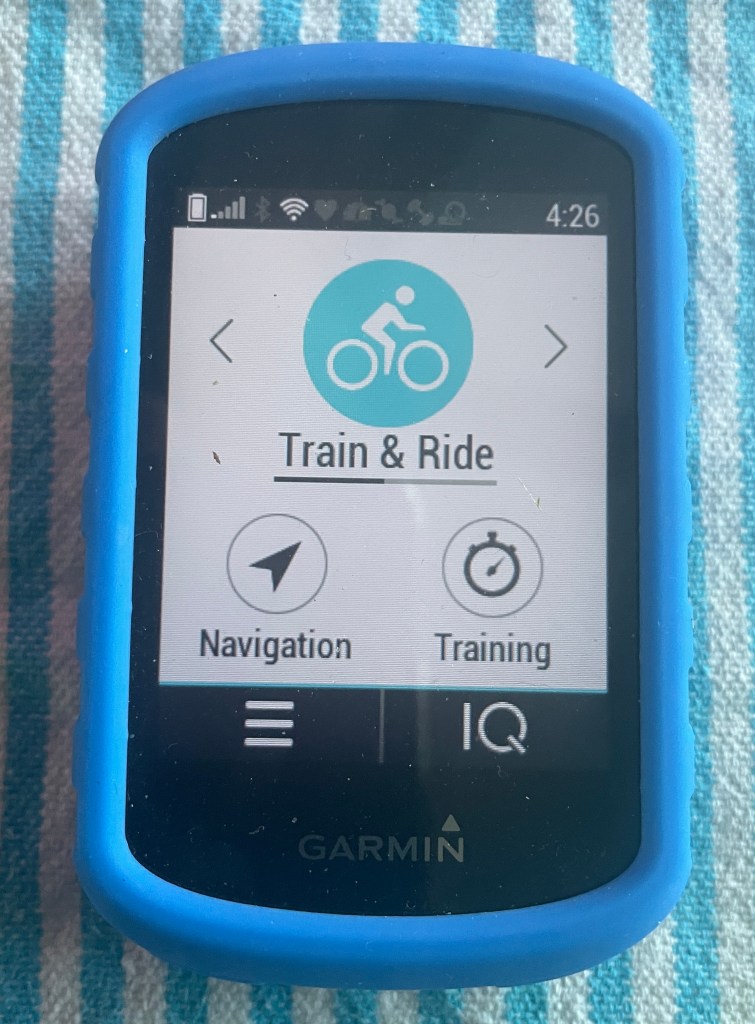
For the obsessive roadie and elite athlete, there are computers made by Garmin and others that will measure anything you can think of. They are basically smaller versions of your smartphone and sometimes even come with color screens. Bike computers today can also connect with your phone and even tell you who called or sent you a text or email. It can connect to your power meter (if you have one) and even read data from your trainer. A computer like a Garmin can run $400 and up.
Then there are the cycling apps. You can just install one on your phone like the one pictured above, so why even bother to buy a cycling computer when you have a $1,000 device in your pocket (smartphone) that can measure all the things just mentioned? I’ve never used a cycling app, so I can’t comment on how good or bad they are, but I’m going to go out on a limb and say apps and smart devices are probably the future of cycling.
Last Thoughts
Whether to take the plunge and buy a cycling computer is up to you? If you think owning a cycling computer will be worthwhile to you, though, is something to ponder before plopping down your cash or credit card. If you want to track the miles you’ve ridden and see the amount of distance you covered from week to week and at the end of the year, then you should do it. And for $25.00, there’s not much to lose.
With a cycling computer that is higher-end, you will definitely spend more time looking at it during a ride (and even after your ride) and maybe it can help you to focus on areas you want to improve. A Garmin or a device like it can be an excellent training device. I would say that before you make any decision just think about how a bike computer might enhance your cycling.

Share this:


 Bicycle Day Trips - Bicycle Travel, Gear Reviews, Photography, Cycling News, and Commentary